


Page 252 - IJB-9-6
P. 252
International Journal of Bioprinting                           3D-Printed GelMA biomaterials in cartilage repair


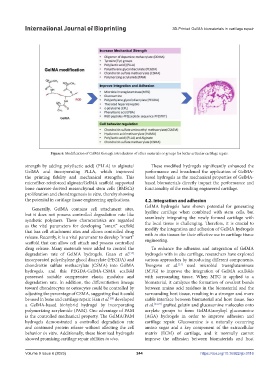
                       Figure 6. Modification of GelMA through introduction of other materials or groups for better articular cartilage repair.

            strength  by  adding  poly(lactic  acid)  (PLLA)  to  alginate/  These modified hydrogels significantly enhanced the
            GelMA and incorporating PLLA, which improved       performance and broadened the application of GelMA-
            the printing fidelity and mechanical strengths. This   based hydrogels as the mechanical properties of GelMA-
            microfiber-reinforced alginate/GelMA scaffold supported   based biomaterials directly impact  the performance and
            bone marrow-derived mesenchymal stem cells (BMSCs)   functionality of the resulting engineered cartilage.
            proliferation and chondrogenesis in vitro, thereby showing
            the potential in cartilage tissue engineering applications.  4.2. Integration and adhesion

               Generally, GelMA contains cell attachment sites,   GelMA hydrogels have shown potential for generating
            but it does not possess controlled degradation rate like   hyaline cartilage when combined with stem cells, but
            synthetic polymers. These characteristics are regarded   seamlessly integrating the newly formed cartilage with
            as the vital parameters for developing “smart” scaffold   the  local  tissue  is  challenging.  Therefore,  it  is  crucial  to
            that has cell attachment sites and allows controlled drug   modify the integration and adhesion of GelMA hydrogels
            release. Recently, it is a vital parameter to develop “smart”   with in situ tissues for their effective use in cartilage tissue
            scaffold that can allow cell attach and possess controlled   engineering.
            drug release. Many materials were added to control the   To enhance the adhesion and integration of GelMA
            degradation rate of GelMA hydrogels. Guan  et al.    hydrogels with in situ cartilage, researchers have explored
                                                        [19]
            incorporated polyethylene glycol diacrylate (PEGDA) and   various approaches by introducing different components.
            chondroitin sulfate methacrylate (CSMA) into GelMA   Trengove  et al.   used  microbial  transglutaminase
                                                                             [21]
            hydrogels, and this PEGDA-GelMA-CSMA scaffold      (MTG) to improve the integration of GelMA scaffolds
            possessed suitable compressive elastic modulus and   with surrounding tissue. When MTG is applied to a
            degradation rate. In addition, the differentiation lineage   biomaterial, it catalyzes the formation of covalent bonds
            toward chondrocytes or osteocytes could be controlled by   between amino acid residues in the biomaterial and the
            adjusting the percentage of CSMA, suggesting that it could   surrounding host tissue, resulting in a stronger and more
            be used in bone and cartilage repair. Han et al.  developed   stable interface between biomaterial and host tissue. Suo
                                                [20]
            a GelMA-based biohybrid hydrogel by incorporating   et al. [22,23]  grafted gelatin and glucosamine molecules onto
            polymerizing acrylamide (PAM). One advantage of PAM   acrylate groups to form GelMA/acryloyl glucosamine
            is the controlled mechanical property. The GelMA/PAM   (AGA) hydrogels in order to improve adhesion and
            hydrogels demonstrated a controlled degradation rate   cartilage  repair. Glucosamine is  a naturally occurring
            and continued protein release without affecting the cell   amino sugar and a key component of the extracellular
            behavior in vitro. Additionally, these biomixed hydrogels   matrix (ECM) of cartilage, and it normally cannot
            showed promising cartilage repair abilities in vivo.  improve the adhesion between biomaterials and host


            Volume 9 Issue 6 (2023)                        244                         https://doi.org/10.36922/ijb.0116

