


Page 384 - IJB-9-6
P. 384
International Journal of Bioprinting                               Biomimetic biofabrication of tumors volume


            components of the TME and other relevant features, such   biochemical, mechanical, and physical cues. Therefore, it is
            as the supporting vasculature and the fluid dynamics.  of utmost importance that the specific biomaterial mimics
               Lastly,  to  overcome  the  disadvantages  of  MCTS   the physiochemical characteristics of the native ECM [17,47] .
            models, tumor-on-a-chip  platforms have emerged as   Particularly, for 3D bioprinting applications, biomaterials
                                 [42]
                                                                                                        [48]
            microfluidics cell culture devices designed to recapitulate   which can be adopted for use as biomaterial inks  are
            the tumor physiology by mimicking a dynamic TME,   properly named bioinks  following the addition of living
                                                               cells
                                                                      . Specifically, when designing a biomaterial ink,
                                                                  [49,50]
            including and providing fluid flow, perfusion, and   the mechanical and biochemical properties of the ink are
            chemical gradients. Comprehensive reviews on 3D-printed   needed to be taken into consideration for the printability
            tumor-on-a-chip have been recently released with detailed   and the biocompatibility of the constructs . Therefore, the
                                                                                                [51]
            insights and information [43,44] .
                                                               limitations imparted by the material itself and the choice of
               However, although these approaches may serve as useful   the bioprinting technology inevitably narrow the range of
            tools to understand the roles of biochemical and physical   biomaterials available to engineer a 3D-bioprinted cancer
            cues in tumor initiation and progression, these strategies   model. Typically, biocompatible hydrogel material inks
            lack the ability to control the location and organization of   (>90% w/v water) can be synthesized from a wide array of
            multiple cells in a complex system such as the TME.  naturally derived and synthetic polymers.
               In the last decade, tremendous efforts and progresses   Naturally derived polymers are obtained from natural
            have been made in the development of 3D culture models   sources and can form hydrogels that usually demonstrate
            that  can more  accurately resemble  the  in vivo tumor   good biocompatibility and biodegradability. Naturally
            milieu. To this purpose, 3D bioprinting technologies and   derived polymers could be further classified based on
            advanced biomaterials are gaining more interest because   the native source. Indeed, polymers such as alginate,
            of the potential to form more complex and well-organized   agarose, or gellan gum are obtained from plant-based or
            constructs and to better control the distribution of the cells   living organisms like algae or seaweeds and lack specific
                              [45]
            within the 3D structure . Moreover, 3D bioprinting relies   motifs for cell adhesion, whereas others, such as collagen,
            on the capability of building a full range of large-scale   gelatin, fibrin, and even decellularized tissue-specific ECM
            tumor models with multiple biomaterials, various cell   materials, are derived from xenogeneic sources (generally
            types, and perfusable networks with high resolution and   vertebrates), which exhibit the inherent ability to foster cell
            reproducibility  (Figure 2).                       adhesion. Despite the elevated biocompatibility and ECM-
                        [46]
                                                               like properties, hydrogels formed from naturally derived
            3.1. Biomaterial inks                              polymers have some limitations, such as their weak
            The biomaterials used to engineer a 3D cancer model should   mechanical properties (compared to synthetic hydrogels)
            be selected to resemble the native TME, providing cells not   or batch-to-batch variability , which may lead to low
                                                                                      [52]
            only with a scaffolding structure, but also with appropriate   reproducibility and consistency.


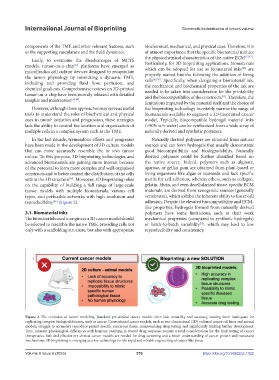
            Figure 2. The evolution of cancer modeling. Standard pre-clinical cancer models often lack versatility and accuracy, making them inadequate for
            replicating complex biological diseases, such as cancer. Conventional cancer models, such as two-dimensional (2D) cultured cancer cell lines and animal
            models, struggle to accurately reproduce patient-specific cancerous tissue, compromising drug testing and significantly limiting further development.
            Thus, inherent physiological differences with humans, resulting in altered drug response, remain crucial considerations for the final testing of cancer
            therapeutics. Safe and effective pre-clinical cancer models are needed for drug screening and a better understanding of cancer growth and metastasis
            mechanisms. 3D bioprinting is emerging as a key technology for the rapid and reliable engineering of cancer-like tissue.

            Volume 9 Issue 6 (2023)                        376                          https://doi.org/10.36922/ijb.1022

