


Page 401 - IJB-9-6
P. 401
International Journal of Bioprinting                                   Biofabrication for islet transplantation


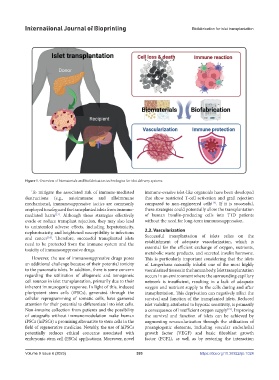
            Figure 1. Overview of biomaterials and biofabrication technologies for islet delivery systems.

               To mitigate the associated risk of immune-mediated   immune-evasive islet-like organoids have been developed
            destructions (e.g., autoimmune and alloimmune      that show restricted T-cell activation and graft rejection
            mechanisms), immunosuppressive tactics are commonly   compared to non-engineered cells . If it is successful,
                                                                                           [14]
            employed to safeguard the transplanted islets from immune-  these strategies could potentially allow the transplantation
            mediated harm . Although these strategies effectively   of human insulin-producing cells into T1D patients
                         [13]
            evade or reduce transplant rejection, they may also lead   without the need for long-term immunosuppression.
            to unintended adverse effects, including hepatotoxicity,
            nephrotoxicity, and heightened susceptibility to infections   2.2. Vascularization
            and  cancer .  Therefore,  successful  transplanted  islets   Successful transplantation of islets relies on the
                     [14]
            need to be protected from the immune system and the   establishment of adequate vascularization, which is
            toxicity of immunosuppressive drugs.               essential for the efficient exchange of oxygen, nutrients,
                                                               metabolic waste products, and secreted insulin hormone.
               However, the use of immunosuppressive drugs poses   This is particularly important considering that the islets
            an additional challenge because of their potential toxicity   of Langerhans naturally inhabit one of the most highly
            to the pancreatic islets. In addition, there is some concern   vascularized tissues in the human body. Islet transplantation
            regarding the utilization of allogeneic and xenogeneic   occurs in an environment where the surrounding capillary
            cell sources in islet transplantation, primarily due to their   network  is  insufficient, resulting  in  a lack  of  adequate
            inherent immunogenic response. In light of this, induced   oxygen and nutrient supply to the cells during and after
            pluripotent stem cells (iPSCs), generated through the   transplantation. This deprivation can negatively affect the
            cellular reprogramming of somatic cells, have garnered   survival and function of the transplanted islets. Reduced
            attention for their potential to differentiate into islet cells.   islet viability, attributed to hypoxic sensitivity, is primarily
            Non-invasive collection from patients and the possibility   a consequence of insufficient oxygen supply . Improving
                                                                                                  [15]
            of autografts without immunomodulation make human   the survival and function of islets  can be achieved by
            iPSCs (hiPSCs) a promising alternative to stem cells in the   augmenting revascularization through the utilization of
            field of regenerative medicine. Notably, the use of hiPSCs   proangiogenic elements, including vascular endothelial
            potentially reduces ethical concerns associated with   growth factor (VEGF) and basic fibroblast growth
            embryonic stem cell (ESCs) applications. Moreover, novel   factor (FGF2), as well as by restoring the interaction


            Volume 9 Issue 6 (2023)                        393                        https://doi.org/10.36922/ijb.1024

