


Page 462 - IJB-9-6
P. 462
International Journal of Bioprinting                             3D bioprinting of in vitro cartilage tissue model


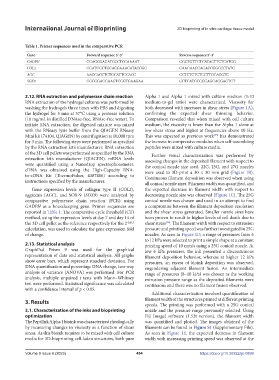
            Table 1. Primer sequences used in the comparative PCR
             Gene                     Forward sequence 5’-3’                  Reverse sequence 5’-3’
             GADPH                    GGAGCGAGATCCCTCCAAAAT                   GGCTGTTGTCATACTTCTCATGG
             COL2                     GGATGGCTGCACGAAACATACCGG                CAAGAAGCAGACCGGCCCTATG
             AGC                      AACCACCTCTGCATTCCACG                    CCTCTGTCTCCTTGCAGGTC
             SOX9                     GGCGGAGGAAGTCGGTGAAGAA                  GCTCATGCCGGAGGAGGAGTGT


            2.12. RNA extraction and polymerase chain reaction  Alpha 1  and  Alpha 1 mixed with  culture medium (1:10
            RNA extraction of the hydrogel cultures was performed by   medium-to-gel  ratio)  were  characterized.  Viscosity  for
            washing the hydrogels three times with PBS and digesting   both decreased with increases in shear stress (Figure 1A),
            the hydrogel for 5 min at 37°C using a protease solution   confirming the expected shear thinning behavior.
            (10 mg/mL in distilled DNAse-free, RNAse-free water). To   Comparison revealed that when mixed with cell culture
            initiate RNA extraction, the digested mixture was mixed   medium, the viscosity is lower than the Alpha 1 alone at
            with the RNeasy lysis buffer from the QIAGEN RNeasy   low shear stress and higher at frequencies above 10 Hz.
            Mini kit (74104, QIAGEN) by centrifugation at 10,000 rpm   This was expected as previous work  has demonstrated
                                                                                            [35]
            for 3 min. The following steps were performed as specified   the increase in compressive modulus when self-assembling
            by the RNA extraction kit’s manufacturer. RNA extraction   peptides were mixed with culture media.
            of the 3D cell pellets was performed as specified by the RNA   Further  visual  characterization  was  performed  by
            extraction kit’s manufacturer (QIAGEN). mRNA levels   assessing changes in the deposited filament with respect to
            were  quantified  using  a  Nanodrop  spectrophotometer.   the conical nozzle size used. 22G, 25G, and 27G nozzles
            cDNA was obtained using the High-Capacity RNA-     were used to 3D-print a 30 × 30 mm grid (Figure 1B).
            to-cDNA Kit (ThermoFisher, 4387406) according to   Continuous filament deposition was observed when using
            instructions specified by the manufacturer.
                                                               all conical nozzle sizes. Filament width was quantified, and
               Gene expression levels of collagen type II (COL2),   the expected decrease in filament width with respect to
            aggrecan (AGC), and SOX-9 (SOX9) were analyzed by   decreasing nozzle size was observed (Figure 1C). The 25G
            comparative polymerase chain reaction (PCR) using   conical nozzle was chosen and used in an attempt to find
            GADPH  as  a  housekeeping  gene.  Primer  sequences  are   a compromise between the filament deposition resolution
            reported in Table 1. The comparative cycle threshold (CT)   and the shear stress generated. Smaller nozzle sizes have
            method, using the expression levels at day 7 and day 14 of   been proven to result in higher levels of cell death due to
            the 3D cell pellet as the reference respectively for the 2 -∆∆Ct    shear stress . The filament width with respect to extrusion
                                                                        [36]
            calculation, was used to calculate the gene expression fold   pressure and printing speed was further investigated in 25G
            of change.                                         nozzles. As seen in Figure 1D, a range of pressures from 6
                                                               to 12 kPa were selected to print a simple shape at a constant
            2.13. Statistical analysis                         printing speed of 10 mm/s using a 25G conical nozzle. At
            GraphPad Prism 9 was used for the graphical        low 6 kPa pressures, the ink presented a discontinuous
            representation of data and statistical analysis. All graphs   filament deposition behavior, whereas at higher 12 kPa
            show error bars, which represent standard deviation. For   pressures, an excess of bioink deposition was observed,
            DNA quantification and percentage DNA change, two-way   engendering adjacent filament fusion. An intermediate
            analysis of variance (ANOVA) was performed. For PCR   range of pressures (8–10 kPa) was chosen as the working
            analysis, multiple unpaired  t tests with Mann–Whitney   extrusion pressure range as the deposited filaments were
            test were performed. Statistical significance was calculated   continuous and there was no filament fusion observed.
            with a confidence interval of p < 0.05.
                                                                  Additional characterization involved quantification of
            3. Results                                         filament width of the structures printed at different printing
                                                               speeds. The printing was performed with a 25G conical
            3.1. Characterization of the inks and bioprinting   nozzle and the pressure range previously selected. Using
            optimization                                       Fiji ImageJ software (1.53t version), the filament width
            The PeptiInk Alpha 1 bioink was characterized rheologically   was quantified and plotted. The images obtained of the
            by measuring changes in viscosity as a function of shear   filaments can be found in Figure S1 (Supplementary File).
            stress. As this bioink requires to be mixed with cell culture   As  seen  in  Figure  1E,  the  expected  decrease  in  filament
            media for 3D-bioprinting cell-laden structures, both pure   width with increasing printing speed was observed at the


            Volume 9 Issue 6 (2023)                        454                        https://doi.org/10.36922/ijb.0899

