


Page 514 - IJB-9-6
P. 514
International Journal of Bioprinting                         Advances for 3D-printed oral drug delivery systems


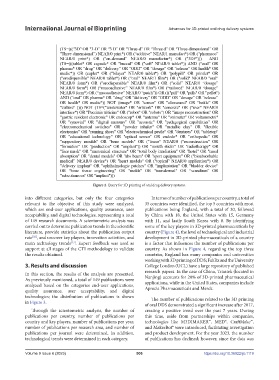
                                         Figure 2. Query for 3D printing of oral drug delivery systems.


            into different categories, but only the four categories   In terms of number of publications per country, a total of
            relevant to the objective of this study were analyzed,   35 countries were identified, the top 5 countries with most
            which  are end-user  applications,  quality assurance,  user   publications being England, with a total of 30, followed
            acceptability, and digital technologies, representing a total   by China with 18, the United States with 15, Germany
            of 149 research documents. A scientometric analysis was   with 11, and lastly South Korea with 8. By identifying
            carried out to determine publication trends in the scientific   some of the key players in 3D-printed pharmaceuticals by
            literature, provide statistics about the publication output   country (Figure 4), the level of technological and industrial
            rate , and uncover key players, innovation activities, and   development in 3D-printed pharmaceuticals of a country
               [32]
            main technology trends . Expert feedback was used as   is a factor that influences the number of publications per
                               [33]
            support at all stages of the CTI methodology to validate   country. As shown in  Figure 4, regarding the top three
            the results obtained.                              countries, England has many companies and universities
                                                               working with 3D printing of DDS; FabRx and the University
            3. Results and discussion                          College London (UCL) have a large repository of published
                                                               research papers. In the case of China, Triastek (located in
            In this section, the results of the analysis are presented.   Nanjing) accounts for 20% of 3D-printed pharmaceutical
            As previously mentioned, a total of 149 publications were   applications, while in the United States, companies include
            analyzed based on the categories end-user applications,   Aprecia Pharmaceuticals and Merck.
            quality assurance, user acceptability, and digital
            technologies; the distribution of publications is shown    The number of publications related to the 3D printing
            in Figure 3.                                       of oral DDS demonstrated a significant increase after 2017,
               Through  the  scientometric  analysis,  the number  of   creating  a  positive  trend  over  the  past  7  years.  During
            publications per country, number of publications per   this time, aside from partnerships within companies,
            country and key players, number of publications per year,   technologies like M3DIMAKER™, MED®, CraftMake™,
            number of publications per research area, and number of   and MakerBot® were introduced, facilitating investigation
            publications per journal were determined.  In addition,   and product development. For the year 2023, the number
            technological trends were determined in each category.  of publications has declined; however, since the data was


            Volume 9 Issue 6 (2023)                        506                          https://doi.org/10.36922/ijb.1119

