


Page 512 - IJB-9-6
P. 512
International Journal of Bioprinting                         Advances for 3D-printed oral drug delivery systems


                                                                  Digital technologies examine advances in this field.
                                                               Currently, the most innovative industries are rapidly
                                                               migrating toward digitalization. In the pharmaceutical
                                                               industry, important efforts for the implementation of
                                                               digital technologies throughout 3D printing processes
                                                               are growing. In this study, a category focused on digital
                                                               technologies is examined.

                                                                  CTI is a strategic and systematic process that focuses
                                                               on monitoring the technical and competitive environment
                                                               of an organization at different levels, with the purpose of
                                                               providing actionable information for decision making in
                                                               the areas of technology, innovation, product design, R&D,
                                                               and markets (global, national, and local) .
                                                                                               [29]
                                                                  Through CTI, it is possible to identify available
                                                               opportunities that can be used to predict future trends,
                                                               generating competitive advantages. Its continuous
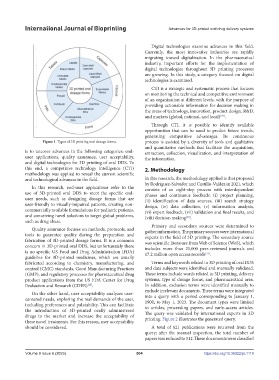
                   Figure 1. Types of 3D printing oral dosage forms.  process is assisted by a diversity of tools and qualitative
                                                               and quantitative methods that facilitate the acquisition,
            is to uncover advances in the following categories: end-  extraction, collection, visualization, and interpretation of
            user applications, quality assurance, user acceptability,   the information.
            and digital technologies for 3D printing of oral DDS. To
            this end, a competitive technology intelligence (CTI)   2. Methodology
            methodology was applied to reveal the current scientific
            and technological advances in the field.           In this research, the methodology applied is that proposed
                                                               by Rodriguez-Salvador and Castillo-Valdez in 2021, which
               In this research, end-user applications refer to the   consists of an eight-step process with interdependent
            use  of  3D-printed  oral  DDS  to  meet  the  specific  end-  phases and continuous feedback: (i) project planning,
            user needs, such as designing dosage forms that are   (ii)  identification of data sources, (iii) search strategy
            user-friendly to visually-impaired patients, creating non-  design, (iv) data collection, (v) information analysis,
            commercially available formulations for pediatric patients,   (vi) expert feedback, (vii) validation and final results, and
            and conceiving novel solutions to target global problems,   (viii) decision making .
                                                                                [30]
            such as drug abuse.
               Quality assurance focuses on methods, protocols, and   Primary and secondary sources were determined to
            tools to guarantee quality during the preparation and   gather information. The primary sources were international
                                                               experts in the field of 3D printing. The secondary source
            fabrication of 3D-printed dosage forms. It is a common   was scientific literature from Web of Science (WoS), which
            concern in 3D-printed oral DDS, but unfortunately there   includes  more  than 21,000  peer-reviewed journals and
            is no specific US Food and Drug Administration (FDA)   17.2 million open access records .
                                                                                         [31]
            guideline for 3D-printed medicines, which are usually
            fabricated  according  to  chemistry,  manufacturing,  and   Terms and keywords related to 3D printing of oral DDS
            control (CMC) standards, Good Manufacturing Practices   and data subjects were identified and manually validated.
            (GMP), and regulatory processes for pharmaceutical drug   These terms include words related to 3D printing, delivery
            product applications from the US FDA Center for Drug   systems, type of dosage forms, and pharmaceutical area.
            Evaluation and Research (CDER) .                   In addition, exclusion terms were identified manually to
                                      [28]
                                                               exclude irrelevant documents. These terms were integrated
               On the other hand, user acceptability analyzes user-
            centered needs, exploring the real demands of the user,   into a query with a period corresponding to January 1,
                                                               1900, to May 1, 2023. The document types were limited
            including preferences and palatability. This can facilitate   to articles, proceeding papers, and early-access articles.
            the introduction of 3D-printed orally administered   The query was validated by international experts in 3D
            drugs to the market and increase the acceptability of   printing. Figure 2 illustrates the generated query.
            these novel treatments. For this reason, user acceptability
            should be considered.                                 A total of 621 publications were retrieved from the
                                                               query; after the manual inspection, the total number of
                                                               papers was reduced to 512. These documents were classified


            Volume 9 Issue 6 (2023)                        504                          https://doi.org/10.36922/ijb.1119

