Page 136 - IJOCTA-15-1
P. 136

R. Bagri, G. Sachdev, D. Agarwal / IJOCTA, Vol.15, No.1, pp.123-136 (2025)


                            (a)                                                           (b)

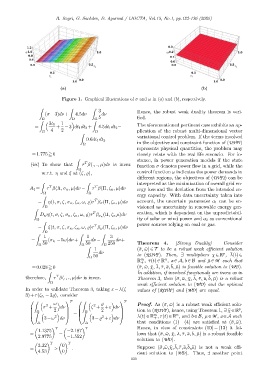
                             Figure 1. Graphical illustrations of σ and ω in (a) and (b), respectively.

                  Z             Z         Z
                                             3                Hence, the robust weak duality theorem is veri-
                =    (σ−3)dν +     4.5dν −    dν
                    Ω            Ω         Ω  5               fied.
                  Z                       Z

                       3t 1  1
                =         + −3 dt 1 dt 2 +   4.5dt 1 dt 2 −   The aforementioned pertinent case exhibits an ap-
                    Ω   4   2              Ω                  plication of the robust multi-dimensional vector
                                     Z
                                                              variational control problem. If the terms involved
                                       0.6dt 1 dt 2
                                      Ω                       in the objective and constraint function of (UVP1)
                                                              represents physical quantities, the problem may
               =1.775≧0                                       closely relate with the real life scenario. For in-
                                                              stance, in power generation models if the state
                                   Z
                                       T
               (iii) To show that    τ β(., ., µ)dν is invex  function σ denotes power flow in a grid, while the
                                    Ω
                    w.r.t. η and ξ at (ζ, ϱ),                 control function ω indicates the power demands in
                                                              different regions, the objectives of (UVP1) can be
                                                              interpreted as the minimization of overall grid en-
                   Z                   Z
                                           T
                       T
              A 4 =   τ β(Λ, σ κ , µ)dν −  τ β(Π, ζ κ , µ)dν  ergy loss and the deviation from the intended en-
                    Ω                   Ω
                                                              ergy capacity. With data uncertainty taken into
                    Z
                                           T
                  −   η(t, σ, ζ, σ κ , ζ κ , ω, ϱ)τ β σ (Π, ζ κ , µ)dν  account, the uncertain parameter a 1 can be en-
                     Ω                                        visioned as uncertainty in renewable energy gen-
                Z
                                          T
              −    D κ η(t, σ, ζ, σ κ , ζ κ , ω, ϱ)τ β σ κ (Π, ζ κ µ)dν  eration, which is dependent on the unpredictabil-
                 Ω                                            ity of solar or wind power and a 2 as conventional
                    Z
                                           T
                  −   ξ(t, σ, ζ, σ κ , ζ κ , ω, ϱ)τ β ω (Π, ζ κ , µ)dν  power sources relying on coal or gas.
                     Ω
                 Z                  Z         Z
                    1                   1         3
               =      (σ t 1  −5ω)dν +   dν −       dν+
                  Ω  50              Ω  50     Ω  250         Theorem 4.       [Strong Duality]     Consider
                                       Z
                                           1                  (¯σ, ¯ω)∈T to be a robust weak efficient solution
                                             dν                                                     p  ¯
                                          50                  to (RUVP). Then, ∃ multipliers ¯χ∈R , λ(t)∈
                                         Ω
                                                                                   ¯
                                                                m
                                                                          n
                                                              R , ¯τ(t)∈R , ¯ a ∈A, b∈B and ¯µ∈M such that
                                                                +
                                                                             ¯
                                                                      ¯
               =0.028≧0                                       (¯σ, ¯ω, ¯χ, λ, ¯τ, ¯ a, b, ¯µ) is feasible solution to (WD).
                                                              In addition, if involved functionals are invex as in
                      Z
                          T
                                                                                       ¯
                                                                                              ¯
            therefore,   τ β(., ., µ)dν is invex.             Theorem 3, then (¯σ, ¯ω, ¯χ, λ, ¯τ, ¯ a, b, ¯µ) is a robust
                       Ω
                                                              weak efficient solution to (WD) and the optimal
            In order to validate Theorem 3, taking ε=λ(ζ −    values of (RUVP) and (WD) are equal.
                     −3ϱ), consider
            3)+τ(ζ t 1
                                                     
              Z                T   Z                  T
                        ω                  ϱ              Proof. As (¯σ, ¯ω) is a robust weak efficient solu-
                     2
                                           2
                    σ +     dν           ζ + +ε dν
                                                                                                           p
               Ω                −  Ω               
                        2                  2              tion to (RUVP), hence, using Theorem 1, ∃ ¯χ∈R ,
                                      Z
                Z
                                                          ¯      m         n      ¯
                        2                  2              λ(t)∈R , ¯τ(t)∈R , and b∈B, ¯µ∈M , ¯ a ∈A such
                     3−ω    dν            3−ϱ +ε dν                  +
                  △                    △                      that conditions (1)−(4) are satisfied at (¯σ, ¯ω).
                        T          T                      Hence, in view of constraints (10)−(13) it fol-
                  1.1375       −2.187
                                                                                ¯
                                                                                      ¯
              =            −                                  lows that (¯σ, ¯ω, ¯χ, λ, ¯τ, ¯ a, b, ¯µ) is a robust feasible
                  2.9775       −1.552
                                                              solution to (WD).
                      T    T
                  3.32       0                                                 ¯    ¯
              =          >       .                            Suppose (¯σ, ¯ω, ¯χ,λ,¯τ,¯ a,b, ¯µ) is not a weak effi-
                  4.53       0
                                                              cient solution to (WD). Thus, ∃ another point
                                                           130
   131   132   133   134   135   136   137   138   139   140   141