


Page 70 - IJOCTA-15-1
P. 70
O. Ayana, D. F. Kanbak, M. Kaya Keles / IJOCTA, Vol.15, No.1, pp.50-70 (2025)


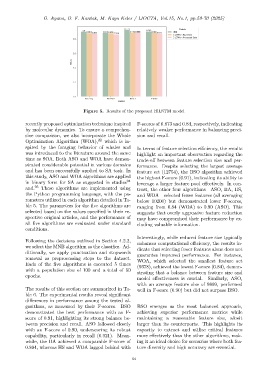
                                      Figure 5. Results of the proposed BiLSTM model


            recently proposed optimization technique inspired  F-scores of 0.873 and 0.84, respectively, indicating
            by molecular dynamics. To ensure a comprehen-     relatively weaker performance in balancing preci-
            sive comparison, we also incorporate the Whale    sion and recall.
            Optimization Algorithm (WOA),    22  which is in-
            spired by the foraging behavior of whales and     In terms of feature selection efficiency, the results
            was introduced to the literature around the same  highlight an important observation regarding the
            time as SOA. Both ASO and WOA have demon-         trade-off between feature selection size and per-
            strated considerable potential in various domains  formance. Despite selecting the largest average
            and has been successfully applied to SA task. In  feature set (12754), the BSO algorithm achieved
            this study, ASO and WOA algorithms are applied    the highest F-score (0.91), indicating its ability to
            in binary form for SA as suggested in studies 94  leverage a larger feature pool effectively. In con-
            and. 95  These algorithms are implemented using   trast, the other four algorithms—ASO, BA, HS,
            the Python programming language, with the pa-     and WOA—selected fewer features (all averaging
            rameters utilized in each algorithm detailed in Ta-  below 10200) but demonstrated lower F-scores,
            ble 5. The parameters for the five algorithms are  ranging from 0.84 (WOA) to 0.90 (ASO). This
            selected based on the values specified in their re-  suggests that overly aggressive feature reduction
            spective original articles, and the performance of  may have compromised their performance by ex-
            all five algorithms are evaluated under standard  cluding valuable information.
            conditions.
                                                              Interestingly, while reduced feature size typically
            Following the decisions outlined in Section 4.2.2,
                                                              enhances computational efficiency, the results in-
            we select the MNB algorithm as the classifier. Ad-
                                                              dicate that selecting fewer features alone does not
            ditionally, we apply punctuation and stopwords
                                                              guarantee improved performance. For instance,
            removal as preprocessing steps to the dataset.
                                                              WOA, which selected the smallest feature set
            Each of the five algorithms is executed 5 times
                                                              (9378), achieved the lowest F-score (0.84), demon-
            with a population size of 100 and a total of 50
                                                              strating that a balance between feature size and
            epochs.
                                                              model effectiveness is crucial.  Similarly, ASO,
                                                              with an average feature size of 9899, performed
            The results of this section are summarized in Ta-  well in F-score (0.90) but did not surpass BSO.
            ble 6. The experimental results reveal significant
            differences in performance among the tested al-
            gorithms, as measured by their F-scores. BSO      BSO emerges as the most balanced approach,
            demonstrated the best performance with an F-      achieving superior performance metrics while
            score of 0.91, highlighting its strong balance be-  maintaining a reasonable feature size, albeit
            tween precision and recall. ASO followed closely  larger than its counterparts. This highlights its
            with an F-score of 0.90, underscoring its robust  capacity to extract and utilize critical features
            capability, particularly in recall (0.921). Mean-  more effectively than the other algorithms, mak-
            while, the BA achieved a comparable F-score of    ing it an ideal choice for scenarios where both fea-
            0.894, whereas HS and WOA lagged behind with      ture diversity and high accuracy are essential.

                                                            64

