


Page 8 - IJOCTA-15-1
P. 8
P. Kumar / IJOCTA, Vol.15, No.1, pp.1-13 (2025)

            imaging has been given in ref. 12  The identifica-  to describe the transmission dynamics of the cit-
            tion of citrus canker by hyperspectral reflectance  rus canker disease. In this study, we propose a
            imaging with spectral information divergence has  novel mathematical model for the citrus canker
            been analysed in ref. 13  Some predictions on the  epidemic by using integer and fractional deriva-
            role of environmental factors on citrus canker via  tives. This research study contains the first non-
            multiple regression have been given in. 14  Mod-  linear mathematical model of citrus canker trans-
            elling for the progress of Asiatic citrus canker on  mission along with supporting analyses, which is
            Tahiti lime in relation to temperature and leaf   the main novelty of our work. Firstly, in Section 2,
            wetness has been done in. 15                      we propose an integer-order non-linear model by
                                                              considering five differential equations along with
                                                              the equilibrium points with stability. After that,
                                                              we propose a fractional-order model to include
                                                              memory effects in the system.   Hysteresis is a
                                                              general sort of memory that we capture in epi-
                                                              demic models. In hysteresis, the present stage
                                                              of the model is influenced by both current and
                                                              previous stages, i.e., past happenings impact the
                                                              current stage of the disease. In Section 3, we
                                                              generalise the proposed integer-order model into
                                                              fractional-order sense by using Caputo fractional
                                                              derivative. As a result of the reasons presented,
                                                              the justification for the Caputo-type formation
                                                              of the given classical model is evident. In Sec-
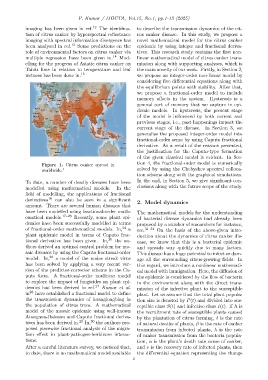
                    Figure 1. Citrus canker spread in         tion 4, the fractional-order model is numerically
                    worldwide. 1                              solved by using the Chebyshev spectral colloca-
                                                              tion scheme along with the graphical simulations.
                                                              In the end, in Section 5, we give significant con-
            To date, a number of deadly diseases have been
            modelled using mathematical models.      In the   clusions along with the future scope of the study.
            field of modelling, the applications of fractional
            derivatives 16  can also be seen in a significant  2. Model dynamics
            amount. There are several human diseases that
            have been modelled using fractional-order math-   The mathematical models for the understanding
            ematical models. 17–23  Recently, some plant epi-  of bacterial disease dynamics had already been
            demics have been successfully modelled in terms   proposed by a number of researchers for instance,
            of fractional-order mathematical models. In, 24  a  see. 31–34  On the basis of the above-given intro-
            plant epidemic model in terms of Caputo frac-     duction about the dynamics of citrus canker dis-
            tional derivative has been given. In, 25  the au-  ease, we know that this is a bacterial epidemic
            thors derived an optimal control problem for mo-  and spreads very quickly due to many factors.
            saic diseases by using the Caputo fractional-order  This disease has a huge potential to infect or dam-
            model. In, 26  a model of the maize streak virus  age all the surrounding citrus-growing fields. In
            has been solved by applying a very recent ver-    this regard, we introduce a nonlinear mathemati-
            sion of the predictor-corrector scheme in the Ca-  cal model with immigration. Here, the diffusion of
            puto form. A fractional-order nonlinear model     the epidemic is considered by the flow of bacteria
            to explore the impact of fungicides on plant epi-  in the environment along with the direct trans-
            demics has been derived in ref. 27  Kumar et al.  mission of the infective plant to the susceptible
            in 28  have established a fractional model to define  plant. Let us assume that the total plant popula-
            the transmission dynamics of huanglongbing in     tion size is denoted by P(t) and divided into sus-
            the population of citrus trees. A mathematical    ceptible class S(t) and infective class I(t). If Λ is
            model of the mosaic epidemic using well-known     the recruitment rate of susceptible plants caused
            Atangana-Baleanu and Caputo fractional deriva-    by the plantation of citrus farming, δ is the rate
            tives has been derived in. 29  In, 30  the authors pro-  of natural deaths of plants, β is the rate of canker
            posed piecewise fractional analysis of the migra-  transmission from infected plants, λ is the rate
            tion effect in plant-pathogen-herbivore interac-  of canker transmission from the bacteria popula-
            tions.                                            tion, α is the plant’s death rate cause of canker,
            After a careful literature survey, we noticed that,  and ν is the recovery rate of infected plants, then
            to date, there is no mathematical model available  the differential equation representing the change
                                                            2

