


Page 121 - IJOCTA-15-2
P. 121
¨
                                E. Sonu¸c, E. Ozcan / IJOCTA, Vol.15, No.2, pp.311-329 (2025)

                                                                Master Thread
                                                          Begin
                                                     Read the problem instance

                                                    Set the number of threads (nt)


                                          Thread #0         ...           Thread #(nt-1)
                                         Initiate history list           Initiate history list


                                      Create a candidate solution      Create a candidate solution

                                       Evaluate the candidate           Evaluate the candidate
                                           solution                         solution


                                         Is the new solution              Is the new solution
                                          acceptable?                      acceptable?
                                     No            Yes                No            Yes

                                 Keep the current  Accept the     Keep the current  Accept the
                                    solution    candidate solution   solution    candidate solution


                                        Update the history list          Update the history list


                                          Is the stopping                  Is the stopping
                                   No                               No
                                          criterion met?                   criterion met?
                                             Yes                              Yes


                                                                Master Thread
                                                       Return the global best
                                                      solution among threads.

                                                           End


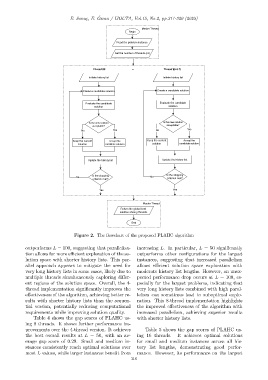
                                  Figure 2. The flowchart of the proposed PLAHC algorithm

            outperforms L = 100, suggesting that paralleliza-  increasing L. In particular, L = 50 significantly
            tion allows for more efficient exploration of the so-  outperforms other configurations for the largest
            lution space with shorter history lists. This par-  instances, suggesting that increased parallelism
            allel approach appears to mitigate the need for   allows efficient solution space exploration with
            very long history lists in some cases, likely due to  moderate history list lengths. However, an unex-
            multiple threads simultaneously exploring differ-  pected performance drop occurs at L = 100, es-
            ent regions of the solution space. Overall, the 4-  pecially for the largest problems, indicating that
            thread implementation significantly improves the  very long history lists combined with high paral-
            effectiveness of the algorithm, achieving better re-  lelism can sometimes lead to suboptimal explo-
            sults with shorter history lists than the sequen-  ration. This 8-thread implementation highlights
            tial version, potentially reducing computational  the improved effectiveness of the algorithm with
            requirements while improving solution quality.    increased parallelism, achieving superior results
                Table 4 shows the gap scores of PLAHC us-     with shorter history lists.
            ing 8 threads. It shows further performance im-
            provements over the 4-thread version. It achieves     Table 5 shows the gap scores of PLAHC us-
            the best overall results at L = 50, with an av-   ing 16 threads.   It achieves optimal solutions
            erage gap score of 0.29. Small and medium in-     for small and medium instances across all his-
            stances consistently reach optimal solutions over  tory list lengths, demonstrating good perfor-
            most L values, while larger instances benefit from  mance. However, its performance on the largest
                                                           316

