


Page 125 - IJOCTA-15-2
P. 125
¨
                                E. Sonu¸c, E. Ozcan / IJOCTA, Vol.15, No.2, pp.311-329 (2025)
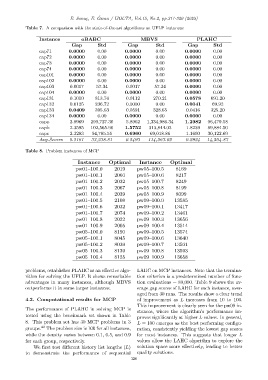
            Table 7. A comparison with the state-of-the-art algorithms on UFLP instances

                  Instance           oBABC                      MBVS                    PLAHC
                                 Gap        Std           Gap         Std           Gap         Std
                  cap71         0.0000      0.00         0.0000       0.00         0.0000       0.00
                  cap72         0.0000      0.00         0.0000       0.00         0.0000       0.00
                  cap73         0.0000      0.00         0.0000       0.00         0.0000       0.00
                  cap74         0.0000      0.00         0.0000       0.00         0.0000       0.00
                  cap101        0.0000      0.00         0.0000       0.00         0.0000       0.00
                  cap102        0.0000      0.00         0.0000       0.00         0.0000       0.00
                  cap103        0.0017      57.34        0.0017       57.34        0.0000       0.00
                  cap104        0.0000      0.00         0.0000       0.00         0.0000       0.00
                  cap131        0.1010     813.74        0.0112      270.21        0.0578      691.20
                  cap132        0.0125     236.72        0.0000       0.00         0.0041      69.92
                  cap133        0.0409     395.63        0.0591      328.65         0.0416     325.20
                  cap134        0.0000      0.00         0.0000       0.00         0.0000       0.00
                  capa          2.8969   299,727.30      5.8962   1,334,986.34     1.2982    96,479.58
                  capb          2.3595   102,565.90      1.5752    313,844.03       1.8239   89,884.50
                  capc          2.3283    94,785.55      0.6960     69,018.86       1.1600   30,122.69
                  Avg.Scores    0.5161    33,238.81      0.5493    114,567.02      0.2924    14,504.87

            Table 8. Problem instances of MCP

                                    Instance     Optimal       Instance      Optimal
                                   pw01–100.0       2019      pw05–100.5       8169
                                   pw01–100.1       2060      pw05–100.6       8217
                                   pw01–100.2       2032      pw05–100.7       8249
                                   pw01–100.3       2067      pw05–100.8       8199
                                   pw01–100.4       2039      pw05–100.9       8099
                                   pw01–100.5       2108      pw09–100.0       13585
                                   pw01–100.6       2032      pw09–100.1       13417
                                   pw01–100.7       2074      pw09–100.2       13461
                                   pw01–100.8       2022      pw09–100.3       13656
                                   pw01–100.9       2005      pw09–100.4       13514
                                   pw05–100.0       8190      pw09–100.5       13574
                                   pw05–100.1       8045      pw09–100.6       13640
                                   pw05–100.2       8039      pw09–100.7       13501
                                   pw05–100.3       8139      pw09–100.8       13593
                                   pw05–100.4       8125      pw09–100.9       13658

            problems, establishes PLAHC as an effective algo-  LAHC on MCP instances. Note that the termina-
            rithm for solving the UFLP. It shows remarkable   tion criterion is a predetermined number of func-
            advantages in many instances, although MBVS       tion evaluations = 80,000. Table 9 shows the av-
            outperforms it in some larger instances.          erage gap scores of LAHC for each instance, aver-
                                                              aged from 30 runs. The results show a clear trend
            4.2. Computational results for MCP                of improvement as L increases from 10 to 100.
                                                              This improvement is clearly seen for the pw09 in-
            The performance of PLAHC in solving MCP is
                                                              stances, where the algorithm’s performance im-
            tested using the benchmark set shown in Table     proves significantly at higher L values. In general,
            8. This problem set has 30 MCP problems in 3      L = 100 emerges as the best performing configu-
            groups. 42  The problem size is 100 for all instances,  ration, consistently yielding the lowest gap scores
            while the density varies between 0.1, 0.5, and 0.9  for most instances. This suggests that longer L
            for each group, respectively.                     values allow the LAHC algorithm to explore the
                We first test different history list lengths (L)  solution space more effectively, leading to better
            to demonstrate the performance of sequential      quality solutions.
                                                           320

