


Page 76 - IJOCTA-15-2
P. 76
Hybridizing biogeography-based optimization and integer programming for solving the travelling tournament ...


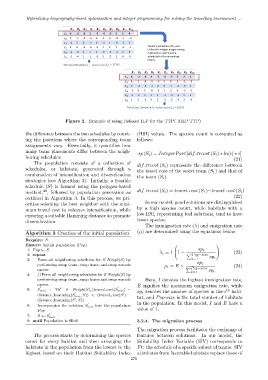
                              Figure 2. Example of using Relaxed ILP for the TTP( RILP-TTP)

            the difference between the two schedules by count-  (HSI) values. The species count is computed as
            ing the positions where the corresponding team    follows:
            assignments vary. Essentially, it quantifies how
            many team placements differ between the neigh-
                                                              sp (S i ) = IntegerPart [dif trcost (S i ) ∗ ln(i) ∗ i]
            boring schedules.
                                                                                                         (21)
                The population consists of a collection of    dif trcost (S i ) represents the difference between
            schedules, or habitats, generated through a
                                                              the travel cost of the worst team (S 1 ) and that of
            combination of intensification and diversification
                                                              the team (S i ).
            strategies (see Algorithm 3). Initially, a feasible
            schedule (S) is formed using the polygon-based
                    40
            method, , followed by population generation as    dif trcost (S i ) = travel cost (S 1 )−travel cost (S i )
                                                                                                         (22)
            outlined in Algorithm 3. In this process, we pri-
                                                                  In our model, good solutions are distinguished
            oritize selecting the best neighbor with the mini-
                                                              by a high species count, while habitats with a
            mum travel cost to enhance intensification, while
                                                              low HSI, representing bad solutions, tend to have
            ensuring a suitable Hamming distance to promote
            diversification.                                  fewer species.
                                                                  The immigration rate (λ) and emigration rate
            Algorithm 3 Creation of the initial population    (µ) are determined using the equations below:
            Require: S.
            Ensure: Initial population (Pop)                                                     !
             1: Pop ← S                                                 λ i = I          sp i            (23)
             2: repeat                                                          1 − P Pop−size
             3:   Form all neighboring schedules for S Neigh(S) by                    i=1     sp i
                  performing swap team, swap home and swap rounds                        sp i            (24)
                                                                                      Pop−size
                                                                          µ i = E × P
                  moves
                                                                                      i=1     sp i
             4:   //Form all neighboring schedules for S Neigh(S) by
                  performing swap team, swap home and swap rounds  Here, I denotes the highest immigration rate,
                  moves .                                     E signifies the maximum emigration rate, while
                   ′        ′                        ′
             5:   S best  :  ∀S  ∈  Neigh(S), (travel cost(S best ) −                                th
                                  ′                     ′     sp i denotes the number of species in the i  habi-
                  distance hamming(S best , S)) < (travel cost(S ) −  tat, and Pop-size is the total number of habitats
                                  ′
                  distance hamming(S , S))
                                        ′                     in the population. In this model, I and E have a
             6:   Incorporates the solution S best into the population
                  Pop                                         value of 1.
                       ′
             7:   S ← S best
             8: until Population is filled                    3.2.4. The migration process
                                                              The migration process facilitates the exchange of
                The process starts by determining the species  features between solutions.  In our model, the
            count for every habitat and then arranging the    Suitability Index Variable (SIV) corresponds to
            habitats in the population from the lowest to the  Ft: the schedule of a specific subset of teams. SIV
            highest based on their Habitat Suitability Index  attributes from favorable habitats replace those of
                                                           271

