


Page 178 - IJOCTA-15-4
P. 178
Oleiwi et al. / IJOCTA, Vol.15, No.4, pp.706-727 (2025)


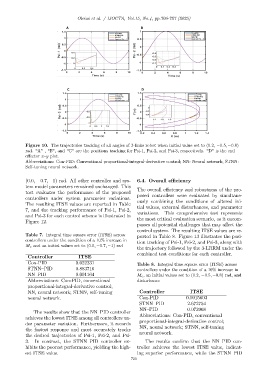
            Figure 10. The trajectories tracking of all angles of 3-links robot when initial value set to (0.2, −0.5, −0.8)
            rad. “A” , “B”, and “C” are the positions tracking for Psi-1, Psi-2, and Psi-3, respectively. “D” is the end
            effector x–y plot.
            Abbreviations: Con-PID: Conventional proportional-integral-derivative control; NN: Neural network; STNN:
            Self-tuning neural network.


            (0.0, −0.7, −1) rad. All other controller and sys-  6.4. Overall efficiency
            tem model parameters remained unchanged. This
                                                              The overall efficiency and robustness of the pro-
            test evaluates the performance of the proposed
                                                              posed controllers were evaluated by simultane-
            controllers under system parameter variations.
                                                              ously combining the conditions of altered ini-
            The resulting ITSE values are reported in Table
                                                              tial values, external disturbances, and parameter
            7, and the tracking performance of Psi-1, Psi-2,
                                                              variations.  This comprehensive test represents
            and Psi-3 for each control scheme is illustrated in
                                                              the most critical evaluation scenario, as it encom-
            Figure 12.
                                                              passes all potential challenges that may affect the
                                                              control system. The resulting ITSE values are re-
            Table 7. Integral time square error (ITSE) across  ported in Table 8. Figure 13 illustrates the posi-
            controllers under the condition of a 10% increase in  tion tracking of Psi-1, Psi-2, and Psi-3, along with
            M c and an initial values set to (0.0, −0.7, −1) rad
                                                              the trajectory followed by the 3-LRRM under the
                                                              combined test conditions for each controller.
             Controller             ITSE
             Con-PID               0.022231                   Table 8. Integral time square error (ITSE) across
             STNN–PID              0.883710                   controllers under the condition of a 10% increase in
             NN–PID                0.001164                   M c , an initial values set to (0.2, −0.5, −0.8) rad, and
             Abbreviations: Con-PID, conventional             disturbance
             proportional-integral-derivative control;
             NN, neural network; STNN, self-tuning             Controller             ITSE
             neural network.                                   Con-PID              0.0915603
                                                               STNN–PID             2.672754
                                                               NN–PID               0.073968
                The results show that the NN–PID controller
            achieves the lowest ITSE among all controllers un-  Abbreviations: Con-PID, conventional
                                                               proportional-integral-derivative control;
            der parameter variation. Furthermore, it records
                                                               NN, neural network; STNN, self-tuning
            the fastest response and most accurately tracks
                                                               neural network.
            the desired trajectories of Psi-1, Psi-2, and Psi-
            3.   In contrast, the STNN–PID controller ex-         The results confirm that the NN–PID con-
            hibits the poorest performance, yielding the high-  troller achieves the lowest ITSE value, indicat-
            est ITSE value.                                   ing superior performance, while the STNN–PID
                                                           720

