


Page 175 - IJOCTA-15-4
P. 175
African vultures optimization-based hybrid neural network–proportional-integral-derivative controller...


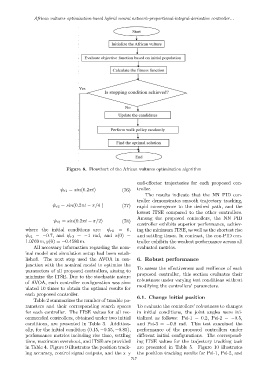
                              Figure 8. Flowchart of the African vultures optimization algorithm


                                                              end-effector trajectories for each proposed con-
                            ψ r1 = sin(0.2πt)          (76)   troller.
                                                                  The results indicate that the NN–PID con-
                                                              troller demonstrates smooth trajectory tracking,
                        ψ r2 = sin(0.2πt − π/4 )       (77)   rapid convergence to the desired path, and the
                                                              lowest ITSE compared to the other controllers.
                                                              Among the proposed controllers, the NN–PID
                         ψ r3 = sin(0.2πt − π/2)       (78)
                                                              controller exhibits superior performance, achiev-
            where the initial conditions are:    ψ r1 = 0,    ing the minimum ITSE, as well as the shortest rise
            ψ r2 = −0.7, and ψ r3 = −1 rad, and x(0) =        and settling times. In contrast, the con-PID con-
            1.0769 m, y(0) = −0.4580 m.                       troller exhibits the weakest performance across all
                All necessary information regarding the nom-  evaluated metrics.
            inal model and simulation setup had been estab-
            lished. The next step used the AVOA in con-       6. Robust performance
            junction with the nominal model to optimize the
                                                              To assess the effectiveness and resilience of each
            parameters of all proposed controllers, aiming to
                                                              proposed controller, this section evaluates their
            minimize the ITSE. Due to the stochastic nature
                                                              robustness under varying test conditions without
            of AVOA, each controller configuration was sim-
                                                              modifying the controllers’ parameters.
            ulated 10 times to obtain the optimal results for
            each proposed controller.
                                                              6.1. Change initial position
                Table 2 summarizes the number of tunable pa-
            rameters and their corresponding search spaces    To evaluate the controllers’ robustness to changes
            for each controller. The ITSE values for all rec-  in initial conditions, the joint angles were ini-
            ommended controllers, obtained under two initial  tialized as follows: Psi-1 = 0.2, Psi-2 = −0.5,
            conditions, are presented in Table 3. Addition-   and Psi-3 = −0.8 rad. This test examined the
            ally, for the initial condition (0.15, −0.55, −0.85),  performance of the proposed controllers under
            performance metrics including rise time, settling  different initial configurations. The correspond-
            time, maximum overshoot, and ITSE are provided    ing ITSE values for the trajectory tracking task
            in Table 4. Figure 9 illustrates the position track-  are presented in Table 5. Figure 10 illustrates
            ing accuracy, control signal outputs, and the x–y  the position tracking results for Psi-1, Psi-2, and
                                                           717

