


Page 27 - IJOCTA-15-4
P. 27
Control strategies and power converter topologies for switched reluctance motors in electric...


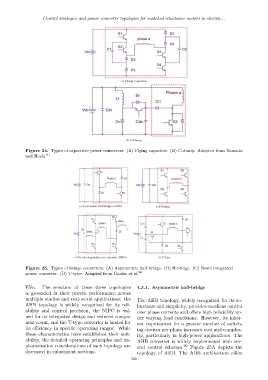
            Figure 24. Types of capacitive power converters. (A) Flying capacitor. (B) C-dump. Adapted from Yamada
            and Hoshi. 81


            Figure 25. Types of bridge converters. (A) Asymmetric half-bridge. (B) H-bridge. (C) Novel integrated
            power converter. (D) T-type. Adapted from Gaafar et al. 88


            EVs.    The selection of these three topologies   4.3.1. Asymmetric half-bridge
            is grounded in their proven performance across
            multiple studies and real-world applications: the  The AHB topology, widely recognized for its ro-
            AHB topology is widely recognized for its reli-   bustness and simplicity, provides excellent control
            ability and control precision, the NIPC is val-   over phase currents and offers high reliability un-
            ued for its integrated design and reduced compo-  der varying load conditions. However, its inher-
            nent count, and the T-type converter is lauded for  ent requirement for a greater number of switch-
            its efficiency in specific operating ranges. While  ing devices per phase increases cost and complex-
            these characteristics have established their suit-  ity, particularly in high-power applications. The
            ability, the detailed operating principles and im-  AHB converter is widely implemented with sev-
            plementation considerations of each topology are  eral control schemes. 90  Figure 25A depicts the
            discussed in subsequent sections.                 topology of AHB. The AHB architecture offers
                                                           569

