


Page 27 - IMO-1-1
P. 27
Innovative Medicines & Omics                                         Antioxidant nanomedicines for therapies


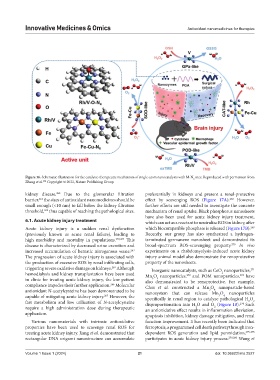
            Figure 16. Schematic illustration for the catalytic-therapeutic mechanism of single-atom nanocatalysts with M-N  sites. Reproduced with permission from
                                                                                   4
            Zhang et al.  Copyright © 2022, Nature Publishing Group.
                   258
            kidney  disease.  Due to the glomerular filtration   preferentially  in  kidneys  and  present  a  renal-protective
                         260
            barrier,  the sizes of antioxidant nanomedicines should be   effect by scavenging ROS (Figure  17A).  However,
                                                                                                   268
                  261
            small enough (<10 nm) to fall below the kidney filtration   further efforts are still needed to investigate the concrete
            threshold,  thus capable of reaching the pathological sites.  mechanism of renal uptake. Black phosphorus nanosheets
                    262
                                                               have also been  used for  acute kidney injury treatment,
            6.1. Acute kidney injury treatment                 which can act as a reactant to neutralize ROS in kidney, after
            Acute  kidney  injury  is  a  sudden  renal  dysfunction   which biocompatible phosphate is released (Figure 17B).
                                                                                                            269
            (previously  known  as  acute  renal  failure),  leading  to   Recently,  our  group  has  also  synthesized  a  hydrogen-
            high  morbidity  and  mortality  in  populations. 263,264  This   terminated germanene nanosheet and demonstrated its
            disease is characterized by decreased urine excretion and   broad-spectrum  ROS-scavenging  property.   In  vivo
                                                                                                   270
            increased  accumulation  of  hematic  nitrogenous  waste.    experiments  on  a  rhabdomyolysis-induced  acute  kidney
                                                         263
            The progression of acute kidney injury is associated with   injury animal model also demonstrate the renoprotective
            the production of excessive ROS by renal infiltrating cells,   property of the nanosheets.
            triggering severe oxidative damage on kidneys.  Although   Inorganic nanocatalysts, such as CeO  nanoparticles,
                                                 265
                                                                                                            271
                                                                                               2
            hemodialysis and kidney transplantation have been used   Mn O  nanoparticles,   and  POM  nanoparticles,  have
                                                                                                       273
                                                                                272
                                                                  3
                                                                    4
            in clinic for treating acute kidney injury, the low patient   also  demonstrated  to  be  renoprotective.  For  example,
            compliance impedes their further application.  Molecular   Choi  et al.  constructed  a  Mn O   nanoparticle-based
                                                266
                                                                                            4
                                                                                          3
            antioxidant N-acetylcysteine has been demonstrated to be   nanosystem that can release Mn O  nanoparticles
            capable of mitigating acute kidney injury.  However, the   specifically in renal region to catalyze pathological H O
                                                                                                4
                                                                                              3
                                             267
                                                                                                             2
                                                                                                           2
            fast metabolism and low utilization of  N-acetylcysteine   disproportionation into H O and O  (Figure 18).  Such
                                                                                                       274
                                                                                    2
            require  a  high  administration  dose  during  therapeutic   an antioxidative effect results in inflammation alleviation,
                                                                                            2
            application.                                       apoptosis inhibition, kidney damage mitigation, and renal
              Various  nanomaterials  with  intrinsic  antioxidative   function improvement. It has recently been indicated that
            properties have been used to scavenge renal ROS for   ferroptosis, a programmed cell death pathway through iron-
            treating acute kidney injury. Jiang et al. demonstrated that   dependent ROS  generation  and  lipid  peroxidation, 275-278
            rectangular DNA origami nanostructure can accumulate   participates in acute kidney injury process. 279,280  Wang et
            Volume 1 Issue 1 (2024)                         21                               doi: 10.36922/imo.2527

