


Page 28 - IMO-1-1
P. 28
Innovative Medicines & Omics                                         Antioxidant nanomedicines for therapies


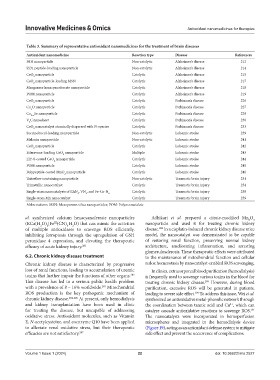
            Table 3. Summary of representative antioxidant nanomedicines for the treatment of brain diseases
            Antioxidant nanomedicine                     Reaction type      Disease                  References
            PdH nanoparticle                             Non-catalytic      Alzheimer’s disease        212
            SS31 peptide-loading nanoparticle            Non-catalytic      Alzheimer’s disease        214
            CeO  nanoparticle                            Catalytic          Alzheimer’s disease        215
               2
            CeO  nanoparticle-loading MSN                Catalytic          Alzheimer’s disease        217
               2
            Manganese hexacyanoferrate nanoparticle      Catalytic          Alzheimer’s disease        218
            POM nanoparticle                             Catalytic          Alzheimer’s disease        219
            CeO  nanoparticle                            Catalytic          Parkinson’s disease        226
               2
            Cu O nanoparticle                            Catalytic          Parkinson’s disease        227
              x
            Cu Se nanoparticle                           Catalytic          Parkinson’s disease        229
              2−x
            V C nanosheet                                Catalytic          Parkinson’s disease        230
             2
            CeO  nanocatalyst atomically dispersed with Pt species  Catalytic  Parkinson’s disease     233
               2
            Succinobucol-loading nanoparticle            Non-catalytic      Ischemic stroke            239
            Melanin nanoparticle                         Non-catalytic      Ischemic stroke            241
            CeO  nanoparticle                            Catalytic          Ischemic stroke            242
               2
            Edaravone-loading CeO  nanoparticle          Multiple           Ischemic stroke            243
                            2
            ZIF-8-coated CeO  nanoparticle               Catalytic          Ischemic stroke            244
                        2
            POM nanoparticle                             Catalytic          Ischemic stroke            245
            Polypeptide-coated MnO  nanoparticle         Catalytic          Ischemic stroke            246
                            2
            Thioether-containing nanoparticle            Non-catalytic      Traumatic brain injury     251
            Trimetallic nanocatalyst                     Catalytic          Traumatic brain injury     254
            Single-atom nanocatalysts of RhN , VN , and Fe-Cu-N 6  Catalytic  Traumatic brain injury   258
                                  4
                                      4
            Single-atom Mn nanocatalyst                  Catalytic          Traumatic brain injury     259
            Abbreviations: MSN: Mesoporous silica nanoparticles; POM: Polyoxometalate

            al. synthesized calcium hexacyanoferrate nanoparticles   Adhikari  et al.  prepared  a  citrate-modified  Mn O
                                                                                                           3
                                                                                                             4
            (KCa(H O) [Fe (CN) H O) that can mimic the activities   nanoparticle and used it for treating chronic kidney
                        III
                                2
                     2
                  2
                             6·
            of multiple antioxidases to scavenge ROS efficiently,   disease.  In a cisplatin-induced chronic kidney disease mice
                                                                     288
            inhibiting ferroptosis through the upregulation of GSH   model, the nanocatalyst was demonstrated to be capable
            peroxidase 4 expression, and elevating the therapeutic   of restoring renal function, preserving normal kidney
            efficacy of acute kidney injury. 281               architecture, ameliorating inflammation, and arresting
                                                               glomerulosclerosis. These therapeutic effects were attributed
            6.2. Chronic kidney disease treatment              to the maintenance of mitochondrial function and cellular
            Chronic kidney disease is characterized by progressive   redox homeostasis by nanocatalyst-enabled ROS scavenging.
            loss of renal functions, leading to accumulation of uremic   In clinics, extracorporeal blood purification (hemodialysis)
            toxins that further impair the functions of other organs.    is frequently used to scavenge various toxins in the blood for
                                                         282
            This disease has led to a serious public health problem   treating  chronic  kidney  disease.  However, during blood
                                                                                        289
            with a prevalence of 8 – 16% worldwide.  Mitochondrial   purification, excessive  ROS  will  be  generated  in  patients,
                                            283
            ROS production is the key pathogenic mechanism of   leading to severe side effect.  To address this issue, Wei et al.
                                                                                    290
            chronic kidney disease. 284-286  At present, only hemodialysis   synthesized an antioxidative metal-phenolic network through
            and kidney transplantation have been used in clinic   the coordination between tannic acid and Cu , which can
                                                                                                   2+
            for treating the disease, but uncapable of addressing   catalyze cascade antioxidative reactions to scavenge ROS.
                                                                                                            291
            oxidative stress. Antioxidant molecules, such as Vitamin   The nanocatalysts were incorporated in hemoperfusion
            E, N-acetylcysteine, and coenzyme Q10 have been applied   microspheres and integrated in the hemodialysis device
            to alleviate renal oxidative stress, but their therapeutic   (Figure 19), acting as an antioxidant defense system to mitigate
            efficacies are not satisfactory. 287               side effect and prevent the occurrence of complications.
            Volume 1 Issue 1 (2024)                         22                               doi: 10.36922/imo.2527

