


Page 26 - IMO-1-1
P. 26
Innovative Medicines & Omics                                         Antioxidant nanomedicines for therapies


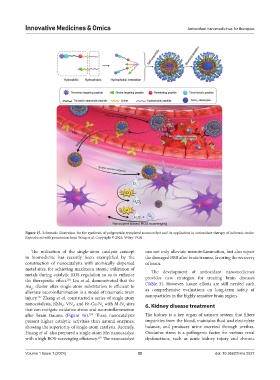
            Figure 15. Schematic illustration for the synthesis of polypeptide-templated nanocatalyst and its application in antioxidant therapy of ischemic stroke.
            Reproduced with permission from Wang et al. Copyright © 2023, Wiley-VCH.


              The  utilization  of  the  single-atom  catalysis  concept   can not only alleviate neuroinflammation, but also repair
            in biomedicine has recently been exemplified by the   the damaged BBB after brain trauma, favoring the recovery
            construction of nanocatalysts with atomically dispersed   of brain.
            metal sites, for achieving maximum atomic utilization of   The  development  of  antioxidant  nanomedicines
            metals during catalytic ROS regulation so as to enhance
                              256
            the therapeutic effect.  Liu et al. demonstrated that the   provides new strategies for treating brain diseases
            Au   cluster  after  single-atom  substitution  is  efficient  to   (Table  3).  However,  future  efforts  are  still  needed  such
              25
            alleviate neuroinflammation in a model of traumatic brain   as  comprehensive  evaluations  on  long-term  safety  of
            injury.  Zhang et al. constructed a series of single-atom   nanoparticles in the highly sensitive brain region.
                 257
            nanocatalysts, RhN , VN , and Fe-Cu-N  with M-N  sites   6. Kidney disease treatment
                                                      4
                           4
                                            6
                                4
            that can mitigate oxidative stress and neuroinflammation
            after  brain  trauma  (Figure  16).   These  nanocatalysts   The kidney is a key organ of urinary system that filters
                                       258
            present higher catalytic activities than natural enzymes,   impurities from the blood, maintains fluid and electrolyte
            showing the superiority of single-atom catalysis. Recently,   balance,  and  produces  urine  excreted  through  urethra.
            Huang et al. also prepared a single-atom Mn nanocatalyst   Oxidative stress is a pathogenic factor for various renal
            with a high ROS-scavenging efficiency.  The nanocatalyst   dysfunctions, such as acute kidney injury and chronic
                                           259
            Volume 1 Issue 1 (2024)                         20                               doi: 10.36922/imo.2527

