


Page 97 - IMO-1-1
P. 97
Innovative Medicines & Omics SARS-CoV-2 inhibition by quinolines
control due to its documented in silico efficacy in inhibiting
the M of the virus, as evidenced in the literature. 38-40
pro
This careful selection of control molecules ensures the
reliability of our assay outcomes by providing appropriate
comparative benchmarks against which the activity of
test substances can be evaluated. The Euclidean distance
between the atoms of each compound and the sulfur atom
of the catalytic residue C145 was calculated to confirm the
best conformation achieved during the docking tests.
2.9. Protein and ligand preparation
The two-dimensional (2D) configuration of the reference
compounds was obtained from the Zinc and PubChem
databases, and the 2D structure of compounds Q1a – Q4a
and Q1b – Q4b were designed using Chemsketch software
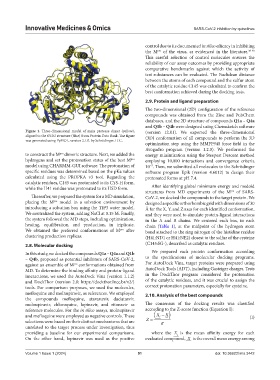
Figure 1. Three-dimensional model of main protease dimer (yellow), (version 12.01). We exported the three-dimensional
aligned to the 6Y2G structure (blue) from Protein Data Bank. The figure (3D) conformation of all compounds to perform the 3D
was generated using PyMOL, version 2.1.0, by Schrödinger, LLC.
optimization step using the MMFF94S force field in the
Avogadro program (version 1.2.0). We performed the
to construct the M dimeric structure. Next, we added the energy minimization using the Steepest Descent method
pro
hydrogens and set the protonation states of the best M employing 10,000 interactions and convergence criteria
pro
model using CHARMM-GUI software. The protonation of 10 . Then, we submitted all molecules to the Schrödinger
−7
specific residues was determined based on the pKa values software program Epik (version 4.6012) to design their
calculated using the PROPKA v3 tool. Regarding the protonated forms at pH 7.4.
catalytic residues, C145 was protonated to its CYS-H form,
while the H41 residue was protonated to its HSD form. After identifying global minimum energy and medoid
structures from MD experiments of the M of SARS-
pro
Thereafter, we prepared the system for a MD simulation, CoV-2, we docked the compounds to the target protein. We
placing the M model in a solvation environment by designed a specific orthorhombic grid with dimensions of 30
pro
introducing a solvation box using the TIP3 water model. Å for the X, Y, and Z axes for each identified conformation,
We neutralized the system, adding NaCl at 0.15 M. Finally, and they were used to simulate protein-ligand interactions
the system followed the MD steps, including optimization, in the A and B chains. We centered each box, in each
heating, equilibration, and production, in triplicate. chain (Table 1), at the midpoint of the hydrogen atom
We obtained the preferred conformations of M after bond attached to the ring nitrogen of the histidine residue
pro
clustering production replicas. (H41:ND1 or H41:NE2) closest to the sulfur of the cysteine
2.8. Molecular docking (C145:SG-), described as catalytic residues.
In this study, we docked the compounds Q1a – Q4a and Q1b We prepared each protein conformation according
– Q4b, proposed as potential inhibitors of SARS-CoV-2, to the specifications of molecular docking programs.
against an ensemble of M conformations obtained from For AutoDock Vina, target proteins were prepared using
pro
MD. To determine the binding affinity and protein-ligand AutoDock Tools (ADT), including Gasteiger charges. Tests
interactions, we used the AutoDock Vina (version 1.1.2) in the DockThor program considered the protonation
and DockThor (version 2.0; https://dockthor.lncc.br/v2/) of the catalytic residues, and it was crucial to assign the
tools. For comparison purposes, we used the molecules, correct protonation parameters, especially for cysteine.
mefloquine and molnupiravir, as references. We employed 2.10. Analysis of the best compounds
the compounds mefloquine, atazanavir, daclatasvir,
molnupiravir, chloroquine, lopinavir, and ritonavir as The consensus of the docking results was classified
reference molecules. For the in silico assays, molnupiravir according to the Z-score function (Equation I):
and mefloquine were employed as negative controls. These ( X i − X ) (I)
selections were based on their distinct mechanisms that are Z = σ
unrelated to the target process under investigation, thus
providing a baseline for our experimental comparisons. where the X is the mean affinity energy for each
i
On the other hand, lopinavir was used as the positive evaluated compound, X is the overall mean energy among
Volume 1 Issue 1 (2024) 91 doi: 10.36922/imo.3442

