


Page 98 - IMO-1-1
P. 98
Innovative Medicines & Omics                                           SARS-CoV-2 inhibition by quinolines


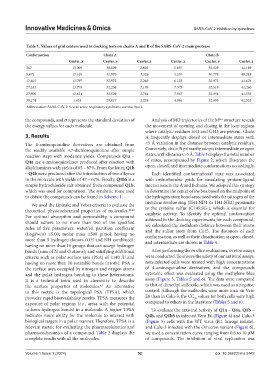
            Table 1. Values of grid centers used in docking tests on chains A and B of the SARS‑CoV‑2 main protease
            Conformation                     Chain A                                     Chain B
                              Center_x       Center_y      Center_z       Center_x      Center_y       Center_z
            267                −15.009       −30.809         2.602         5.857         −32.129        41.189
            5,671              −17.105       −32.970         3.326         5.257         −30.779        40.249
            13,403             −13.797       −32.972         2.249         6.123         −32.972        41.676
            27,333             −13.776       −32.208         3.199         7.573         −32.519        41.260
            27,906             −12.421       −32.509         2.764         7.567         −32.194        41.535
            38,174             −1.624        −29.817         2.224         4.946         −32.800        41.553
            Abbreviation: SARS-CoV-2: Severe acute respiratory syndrome coronavirus 2.

            the compounds, and σ represents the standard deviation of   Analysis of MD trajectories of the M  structure reveals
                                                                                              pro
            the energy values for each molecule.               the movement of opening and closing in the loop regions
                                                               where catalytic residues H41 and C145 are present. Chain
            3. Results                                         A frequently displays closed or intermediate states with

            The 4-aminoquinoline derivatives are obtained from   <5 Å variation in the distance between catalytic residues.
            the readily available 4,7-dichloroquinoline after simple   Conversely, chain B primarily adopts intermediate or open
            reaction steps with moderate yields. Compounds  Q1a –   states, with distances >5 Å. Table 3 displays the total number
            Q4a are 4-aminoquinolines produced after reaction with   of states, accompanied by Figure 2, which illustrates the
            alkyldiamines with yields of 65 – 87%. From the latter, Q1b   open, closed, and intermediate conformations accordingly.
            – Q4b were produced after the introduction of two alkynes   Each identified conformational state was associated
            in the molecule with yields of 47 – 62%. Finally, Q1bS is a   with orthorhombic grids for simulating protein-ligand
            simple hydrochloride salt obtained from compound Q1b,   interactions in the A and B chains. We adopted this strategy
            which was used for comparison. The synthetic route used   to determine the center of the box based on the midpoint of
            to obtain the compounds can be found in Scheme 1.  the hydrogen atom bond associated with the nitrogen of the
                                                               histidine residue ring (H41:ND1 or H41:NE2) proximate
              We used the Lipinski and Veber criteria to evaluate the
            theoretical physicochemical properties of molecules. 41,42    to the cysteine sulfur (C145:SG-), which is essential for
            For optimal absorption and permeability, a compound   catalytic activity. To identify the optimal conformation
                                                               achieved in the docking experiments for each compound,
            should  adhere  to  no  more  than  two  of  the  specified   we calculated the Euclidean distance between their atoms
            rules of five parameters: water/oil partition coefficient   and the sulfur atom from C145. The distances of each
            (LogPw/o)  ≤5.00;  molar  mass  ≤500  g/mol;  having  no   conformation, as well as their classification as open, closed,
            more than 5 hydrogen donors (OH and NH combined);   and intermediate are shown in Table 4.
            having no more than 10 groups that can accept hydrogen
            bonds (sum of N and O atoms); and satisfying additional   After performing the in silico evaluations, in vitro assays
            criteria such as polar surface area (PSA) of ≤140 Å  and   were conducted. To ensure the safety of our antiviral assays,
                                                      2
            having no more than 10 rotatable bonds (nrotb). PSA is   non-infected cells were treated with high concentrations
            the surface area occupied by nitrogen and oxygen atoms   of 4-aminoquinoline derivatives, and the compounds
            and the polar hydrogen bonding to these heteroatoms.   cytotoxic  effect  was  evaluated  using  the  methylene  blue
            It is a technical term used in chemistry to describe   assay (Figure 3, Tables 5 and 6). The data were compared
            the surface properties of molecules.  An alternative   to that of dimethyl sulfoxide, which was used as a negative
                                            43
            to this metric is the topological PSA (TPSA), which   control. Although the molecules were more toxic in Vero
            provides rapid bioavailability results. TPSA measures the   E6 than in Calu-3, the CC  values for both cells were high
                                                                                    50
            exposure of polar regions (i.e., areas with the potential   compared to others in the literature (Tables 5 and 6).
            to form hydrogen bonds) in a molecule. A higher TPSA   To evaluate the antiviral activity of Q1a – Q4a, Q1b –
            indicates more ability for the molecule to interact with   Q4b, and Q1bS in infected Vero E6 (Figure 4) and Calu-3
            biological targets in a polar manner. Therefore, TPSA is a   (Figure  5) cells with the WT virus (B.1 lineage isolate),
            relevant metric for evaluating the pharmacokinetics and   and Calu-3 infected with the Omicron variant (Figure 6),
            pharmacodynamics of a compound. Table 2 displays the   we used a concentration curve ranging from 0.6 to 10 µM
            complete results with all the molecules.           of compounds. The inhibition of viral replication was


            Volume 1 Issue 1 (2024)                         92                               doi: 10.36922/imo.3442

