


Page 102 - IMO-1-1
P. 102
Innovative Medicines & Omics                                           SARS-CoV-2 inhibition by quinolines


                          A                                  B


                          C                                  D


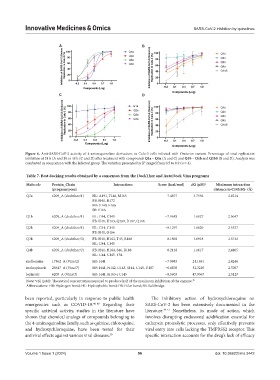
            Figure  6. Anti-SARS-CoV-2 activity of 4-aminoquinoline derivatives in Calu-3  cells infected with Omicron variant. Percentage of viral replication
            inhibition at 24 h (A and B) or 48 h (C and D) after treatment with compounds Q1a – Q4a (A and C) and Q1b – Q4b and Q1bS (B and D). Analysis was
            conducted in comparison with the infected group. The variation presented by R  ranged from 0.5 to 0.9 (n = 4).
                                                              2
            Table 7. Best docking results obtained by a consensus from the DockThor and AutoDock Vina programs
            Molecule   Protein_Chain             Interactions       Score (kcal/mol)  cKi (μM) a  Minimum interaction
                       (program/pose)                                                       distance to C145:SG‑ (Å)
            Q3a        6209_A (dockthor/1)  HL: A191, F140, M165       −7.4877     3.7556         2.6214
                                        PB: H41, H172
                                        HB: F140, E166
                                        SB: E166
            Q1b        6209_A (dockthor/1)  HL: C44, C145              −7.9683     1.6927         2.5647
                                        PB: H41, H163, Q189, D187, Q166
            Q2b        6209_A (dockthor/1)  HL: C44, C145              −8.1297     1.6020         2.5537
                                        PB: H41, G166
            Q3b        6209_A (dockthor/3)  PB: H41, H163, T45, R188   −8.1892     1.6918         2.5742
                                        HL: C44, C145
            Q4b        6209_A (dockthor/2)  PB: H41, H164, S46, R188   −8.2128     1.1617         2,4405
                                        HL: C44, C145, Y54
            mefloquine  17362_A (Vina/2)  HB: H41                      −7.0983     21,1691        2.4246
            molnupiravir  25647_A (Vina/7)  HB: H41, N142, G143, S144, C145, D187  −6,6876  52,3210  2.3767
            lopinavir  6209_A (Vina/3)  HB: H41, H163 e C145           −8,5603     47,9367        2,3123
            Note:  cKi (µM): Theoretical concentration required to produce half of the maximum inhibition of the enzyme. 78
                a
            Abbreviations: HB: Hydrogen bond; HL: Hydrophobic bond; PB: Polar bond; SB: Salt bridge.
            been reported, particularly in response to public health   The inhibitory action of hydroxychloroquine on
            emergencies such as COVID-19. 46-48  Regarding their   SARS-CoV-2 has been extensively documented in the
            specific antiviral activity, studies in the literature have   literature. 49-51  Nonetheless, its  mode  of action, which
            shown that chemical analogs of compounds belonging to   involves disrupting endosomal acidification essential for
            the 4-aminoquinoline family, such as quinine, chloroquine,   cathepsin proteolytic processes, only effectively prevents
            and hydroxychloroquine, have been tested for their   viral entry into cells lacking the TMPRSS2 receptor. This
            antiviral effects against various viral diseases. 20  specific interaction accounts for the drug’s lack of efficacy


            Volume 1 Issue 1 (2024)                         96                               doi: 10.36922/imo.3442

