


Page 109 - IMO-2-2
P. 109
Innovative Medicines & Omics                                            Modeling Aurora-B kinase inhibitors


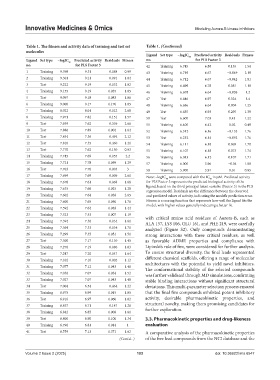
            Table 1. The fitness and activity data of training and test set   Table 1. (Continued)
            molecules
                                                               Ligand  Set type  −logIC 50  Predicted activity  Residuals Fitness
            Ligand  Set type  −logIC 50  Predicted activity  Residuals Fitness  no.  for PLS Factor 3
            no.                  for PLS Factor 3              42    Training  6.745    6.88      0.135  1.54
            1     Training  9.398    9.31      −0.088  0.99    43    Training  6.719    6.67      −0.049  2.19
            2     Training  9.301    9.21      −0.091  1.04    44    Training  6.712    6.67      −0.042  1.81
            3     Test     9.222     9.19      −0.032  1.02    45    Training  6.699    6.78      0.081  1.18
            4     Training  9.155    9.19      0.035  1.05     46    Training  6.678    6.64      −0.038  1.2
            5     Test     9.097     9.18      0.083  1.06     47    Test     6.646     6.97      0.324  1.4
            6     Training  9.000    9.17      0.170  1.05     48    Training  6.636    6.64      0.004  1.25
            7     Training  8.022    8.01      −0.012  2.68    49    Test     6.635     6.93      0.295  1.39
            8     Training  7.971    7.82      −0.151  1.57    50    Test     6.600     7.03      0.43   1.22
            9     Test     7.959     7.62      −0.339  2.66    51    Training  6.400    6.42      0.02   0.49
            10    Test     7.886     7.89      0.004  1.64     52    Training  6.312    6.16      −0.152  1.76
            11    Test     7.854     7.36      −0.494  2.12    53    Test     6.232     6.14      −0.092  1.76
            12    Test     7.810     7.35      −0.460  1.21    54    Training  6.111    6.18      0.069  1.78
            13    Test     7.770     7.62      −0.150  0.93    55    Training  6.107    6.18      0.073  1.74
            14    Training  7.745    7.69      −0.055  2.2     56    Training  6.013    6.12      0.107  1.71
            15    Training  7.721    7.78      0.059  1.29     57    Training  6.000    5.96      −0.04  1.08
            16    Test     7.703     7.70      −0.003  3       58    Training  5.900    5.91      0.01   0.95
            17    Training  7.699    7.69      −0.009  2.61    Note: −logIC  were computed with the IC  in µM. Predicted activity
                                                                        50
                                                                                          50
            18    Training  7.678    7.61      −0.068  1.68    for PLS Factor 3 represents the predicted biological activity of the
            19    Training  7.635    7.66      0.025  1.28     ligand, based on the third principal latent variable (Factor 3) in the PLS
                                                               regression model. Residuals are the difference between the observed
            20    Training  7.602    7.64      0.038  2.65     and predicted values of activity, indicating the model’s prediction error.
            21    Training  7.600    7.65      0.050  1.76     Fitness is a scoring function that represents how well the ligand fits the
                                                               model, with higher values generally indicating a better fit.
            22    Training  7.592    7.64      0.048  1.44
            23    Training  7.523    7.53      0.007  1.19
            24    Training  7.394    7.36      −0.034  1.61    with critical amino acid residues of Aurora-B, such as
                                                               ALA 157, LYS 106, GLU 161, and PHE 219, were carefully
            25    Training  7.364    7.33      −0.034  1.71    analyzed (Figure S2). Only compounds demonstrating
            26    Training  7.299    7.35      0.051  1.51     strong interactions with these critical residues, as well
            27    Test     7.300     7.17      −0.130  1.45    as  favorable ADME properties  and compliance  with
            28    Training  7.276    7.19      −0.086  1.03    Lipinski’s rule of five, were considered for further analysis.
            29    Test     7.247     7.20      −0.047  1.64    To ensure structural diversity, the final leads represented
            30    Training  7.102    7.10      −0.002  1.12    different chemical scaffolds, offering a range of molecular
            31    Training  7.077    7.12      0.043  1.46     architectures with the potential to yield novel inhibitors.
                                                               The  conformational  stability  of  the selected  compounds
            32    Training  7.036    7.07      0.034  1.52     was further validated through MD simulations, confirming
            33    Training  7.027    7.07      0.043  1.48     stable  binding  interactions  without  significant  structural
            34    Test     7.004     6.54      −0.464  1.22    deviations. This multi-parameter selection process ensured
            35    Training  6.975    6.99      0.015  1.05     that the final five compounds exhibited potent inhibitory
            36    Test     6.910     6.97      0.060  1.02     activity, desirable pharmacokinetic properties, and
            37    Training  6.857    6.71      −0.147  1.26    structural novelty, making them promising candidates for
            38    Training  6.842    6.85      0.008  1.61     further exploration.
            39    Test     6.800     6.90      0.100  1.34     3.3. Pharmacokinetic properties and drug-likeness
            40    Training  6.796    6.81      0.014   1       evaluation
            41    Test     6.759     7.13      0.371  1.62     A comparative analysis of the pharmacokinetic properties
                                                    (Cont'd...)   of the five lead compounds from the NCI database and the


            Volume 2 Issue 2 (2025)                        103                               doi: 10.36922/imo.6547

