


Page 114 - IMO-2-2
P. 114
Innovative Medicines & Omics                                            Modeling Aurora-B kinase inhibitors


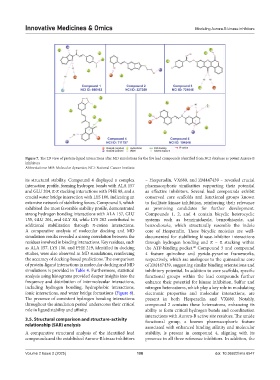
            Figure 7. The 2D view of protein-ligand interactions after MD simulations for the five lead compounds identified from NCI database as potent Aurora-B
            inhibitors
            Abbreviations: MD: Molecular dynamics; NCI: National Cancer Institute.

            its structural stability. Compound 4 displayed a complex   – Hesperadin, VX680, and ZM447439 – revealed crucial
            interaction profile, forming hydrogen bonds with ALA 157   pharmacophoric similarities supporting their potential
            and GLU 204, π-π stacking interactions with PHE 88, and a   as effective inhibitors. Several lead compounds exhibit
            crucial water bridge interaction with LYS 106, indicating an   conserved core scaffolds and functional groups known
            extensive network of stabilizing forces. Compound 5, which   to facilitate kinase inhibition, reinforcing their relevance
            exhibited the most favorable stability profile, demonstrated   as  promising  candidates  for  further  development.
            strong hydrogen bonding interactions with ALA 157, GLU   Compounds 1, 2, and 4 contain bicyclic heterocyclic
            155, GLU 204, and GLY 84, while LYS 202 contributed to   systems such as benzimidazole, benzothiazole, and
            additional stabilization through  π-cation interactions.   benzodioxole, which structurally resemble the indole
            A  comparative analysis of molecular docking and MD   core of Hesperadin. These bicyclic moieties are well-
            simulation results revealed a strong correlation between the   documented for stabilizing kinase-inhibitor interactions
            residues involved in binding interactions. Key residues, such   through hydrogen bonding and  π –  π stacking within
            as ALA 157, LYS 106, and PHE 219, identified in docking   the ATP-binding pocket.  Compound 5 and compound
                                                                                   46
            studies, were also observed in MD simulations, reinforcing   4 feature quinoline and pyrido-pyrazine frameworks,
            the accuracy of docking-based predictions. The comparison   respectively, which are analogous to the quinazoline core
            of protein-ligand interactions in molecular docking and MD   of ZM447439, suggesting similar binding orientations and
            simulations is provided in Table 4. Furthermore, statistical   inhibitory potential. In addition to core scaffolds, specific
            analysis using histograms provided deeper insights into the   functional groups within the lead compounds further
            frequency and distribution of intermolecular interactions,   enhance their potential for kinase inhibition. Sulfur and
            including hydrogen bonding, hydrophobic interactions,   nitrogen heteroatoms, which play a key role in modulating
            ionic interactions, and water bridge formations (Figure 8).   electronic properties and molecular interactions, are
            The presence of consistent hydrogen bonding interactions   present in both Hesperadin and VX680. Notably,
            throughout the simulation period underscores their critical   compound  2 contains these heteroatoms,  enhancing its
            role in ligand stability and affinity.             ability to form critical hydrogen bonds and coordination
                                                               interactions with Aurora-B active site residues. The amide
            3.5. Structural comparison and structure-activity   functional  group,  a  known  pharmacophoric  feature
            relationship (SAR) analysis                        associated with enhanced binding affinity and molecular
            A comparative structural analysis of the identified lead   stability, is present in compound 4, aligning with its
            compounds and the established Aurora-B kinase inhibitors   presence in all three reference inhibitors. In addition, the


            Volume 2 Issue 2 (2025)                        108                               doi: 10.36922/imo.6547

