


Page 28 - IMO-2-2
P. 28
Innovative Medicines & Omics                                           Herbal remedies for diabetes mellitus


            2. Epidemiology                                    3.1. Type 1 DM

            The rising prevalence of diabetes is closely linked to   Type  1 DM is an autoimmune disease characterized by
            lifestyle changes, obesity, and inadequate physical   the destruction of insulin-producing pancreatic  β-cells
            activity, all of which contribute to insulin resistance   (Figure  2). The development of T1DM is influenced by
                                   12
            and metabolic dysfunction.  The increasing incidence   genetic susceptibility and environmental triggers, which
            of youth-onset T2DM presents long-term healthcare   initiate an autoimmune response. Autoimmune markers,
                     13
            challenges.  These statistics underscore the urgent need   such as glutamic acid decarboxylase autoantibodies
            for improved diabetes prevention, early diagnosis, and   (GAD65),  insulin  autoantibodies  (IAAs), and  islet  cell
            effective management strategies globally. According to   autoantibodies (ICAs), are commonly detected in T1DM
                                                                      18
            the National Non-Communicable Disease Monitoring   patients.  The rate of  β-cell destruction varies among
            Survey, 9.3% of Indian adults aged 18 – 69 years have   patients. In children, the process is typically rapid, often
            diabetes, while 24.5% exhibit impaired fasting glucose   leading to early-onset diabetic ketoacidosis, whereas
            levels. However, the rates of awareness (45.8%),   in adults,  β-cell destruction may occur more gradually,
            treatment (36.1%), and glycemic control (15.7%) remain   allowing for some residual insulin secretion during
            suboptimal. Contributing factors include dietary shifts   the early stages of the disease. Due to absolute insulin
            and insufficient physical activity, resulting in a higher   deficiency, T1DM necessitates lifelong insulin therapy. 22
            prevalence of  obesity, which further exacerbates  the   A range of autoantibodies is associated with T1DM,
            diabetes burden. 14                                including tyrosine phosphatase autoantibodies (IA-2 and
            3. Classification and pathophysiology of           IA-2α), IAAs, ICAs, autoantibodies targeting islet cell
                                                               antigen 512, GAD65, and autoantibodies against the islet-
            DM                                                 specific zinc transporter isoform 8. 23
            Despite its complex causes and diverse clinical    3.2. Type 2 DM
            manifestations, the classification of DM remains crucial
            for accurate clinical evaluation and effective treatment   Type 2 DM is a chronic metabolic disorder characterized by
            selection. DM is primarily categorized into four primary   persistent hyperglycemia resulting from impaired insulin
                                               15
            types: T1DM, T2DM, GDM, and MODY.  The World       secretion and insulin resistance. T2DM accounts for over
                                                                                           24
            Health Organization classification systems serve as a   90% of all diabetes cases globally.  The pathogenesis of
            key reference, though emerging research highlights the   T2DM  involves progressive  β-cell dysfunction, leading  to
            necessity for updated classifications to better reflect the   inadequate insulin release, coupled with peripheral insulin
                               16
            disease’s heterogeneity.  Recent research has identified   resistance in skeletal muscle, liver, and adipose tissue.
                                                                                                            25
            four distinct subtypes of DM, each associated with unique   Obesity, particularly increased visceral adiposity, plays a
            risk factors and treatment responses, highlighting the   crucial  role  in  disease  progression  by  inducing  low-grade
            importance of precision medicine in diabetes management   chronic inflammation, excessive free fatty acid release, and
            (Table 1). 17                                      adipokine dysregulation, all of which contribute to insulin


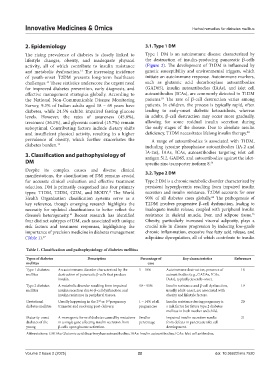
            Table 1. Classification and pathophysiology of diabetes mellitus
            Types of diabetes         Description            Percentage of     Key characteristics   References
            mellitus                                            case
            Type 1 diabetes   An autoimmune disorder characterized by the   5 – 10%  Autoimmune destruction, presence of   18
            mellitus      destruction of pancreatic β-cells that produce   autoantibodies (e.g., GADAs, ICAs,
                          insulin.                                      IAAs), typically juvenile-onset.
            Type 2 diabetes   A metabolic disorder resulting from impaired   90 – 95%  Insulin resistance and β-cell dysfunction,   19
            mellitus      insulin secretion due to β-cell dysfunction and   usually adult-onset, are associated with
                          insulin resistance in peripheral tissues.     obesity and lifestyle factors.
            Gestational   Usually happening in the 2  or 3  pregnancy   1 – 14% of all   Insulin resistance during pregnancy is   20
                                               rd
                                           nd
            diabetes mellitus  trimester and resolving post-delivery.  pregnancies  a risk factor for future type 2 diabetes
                                                                        mellitus in both mother and child.
            Maturity-onset   A monogenic form of diabetes caused by mutations  Smaller   Impaired insulin secretion results   21
            diabetes of the   in a single gene affecting insulin secretion from   percentage  from defects in pancreatic islet cell
            young         β-cells upon glucose activation.              development.
            Abbreviations: GADAs: Glutamic acid decarboxylase autoantibodies; IAAs: Insulin autoantibodies; ICAs: Islet cell antibodies.


            Volume 2 Issue 2 (2025)                         22                               doi: 10.36922/imo.7520

