


Page 29 - IMO-2-2
P. 29
Innovative Medicines & Omics                                           Herbal remedies for diabetes mellitus


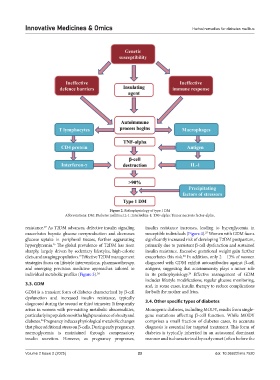
                                                Figure 2. Pathophysiology of type 1 DM
                             Abbreviations: DM: Diabetes mellitus; IL-1: Interleukin-1; TNF-alpha: Tumor necrosis factor-alpha.


            resistance.  As T2DM advances, defective insulin signaling   insulin resistance increases, leading to hyperglycemia in
                    19
            exacerbates hepatic glucose overproduction and decreases   susceptible individuals (Figure 4).  Women with GDM face a
                                                                                        27
            glucose uptake  in peripheral  tissues, further  aggravating   significantly increased risk of developing T2DM postpartum,
            hyperglycemia.  The global prevalence of T2DM has risen   primarily due to persistent β-cell dysfunction and sustained
                        25
            sharply, largely driven by sedentary lifestyles, high-calorie   insulin resistance. Excessive gestational weight gain further
            diets, and an aging population.  Effective T2DM management   exacerbates this risk.  In addition, only 2 – 13% of women
                                   19
                                                                               28
            strategies focus on lifestyle interventions, pharmacotherapy,   diagnosed with GDM exhibit autoantibodies against β-cell
            and emerging precision medicine approaches tailored to   antigens, suggesting that autoimmunity plays a minor role
            individual metabolic profiles (Figure 3). 24       in  its  pathophysiology.   Effective  management  of  GDM
                                                                                 26
                                                               includes lifestyle modifications, regular glucose monitoring,
            3.3. GDM                                           and, in some cases, insulin therapy to reduce complications
            GDM is a transient form of diabetes characterized by β-cell   for both the mother and fetus.
            dysfunction  and  increased  insulin  resistance,  typically
            diagnosed during the second or third trimester. It frequently   3.4. Other specific types of diabetes
            arises in women with pre-existing metabolic abnormalities,   Monogenic diabetes, including MODY, results from single-
            particularly in populations with a high prevalence of obesity and   gene mutations affecting  β-cell function. While MODY
            diabetes.  Pregnancy induces physiological metabolic changes   comprises a small fraction of diabetes cases, its accurate
                  26
            that place additional stress on β-cells. During early pregnancy,   diagnosis is essential for targeted treatment. This form of
            normoglycemia is maintained through compensatory   diabetes is typically inherited in an autosomal dominant
            insulin secretion. However, as pregnancy progresses,   manner and is characterized by early onset (often before the


            Volume 2 Issue 2 (2025)                         23                               doi: 10.36922/imo.7520

