


Page 35 - IMO-2-2
P. 35
Innovative Medicines & Omics                                           Herbal remedies for diabetes mellitus


            Table 4. (Continued)
            No.  Common name    Botanical name    Family   Plant part            Mechanism of action
                                                             used
            37   Bael        Aegle marmelos    Rutaceae   Leaves   Improves insulin function, reduces blood glucose
            38   Ginseng     Panax ginseng     Araliaceae  Root    Enhances insulin secretion, reduces glucose absorption
            39   Shatavari   Asparagus racemosus  Asparagaceae  Root  Enhances insulin secretion, reduces oxidative stress
            40   Hibiscus    Hibiscus rosa-sinensis  Malvaceae  Flowers  Reduces oxidative stress, improves insulin action
            41   Indian Costus  Saussurea lappa  Asteraceae  Root  Enhances insulin action, reduces blood glucose
            42   Barley      Hordeum vulgare   Poaceae    Seeds    Improves insulin resistance, lowers glucose absorption
            43   Wheatgrass  Triticum aestivum  Poaceae   Leaves   Reduces oxidative stress, enhances glucose metabolism
            44   Pumpkin     Cucurbita maxima  Cucurbitaceae  Seeds  Enhances insulin secretion, reduces blood glucose
            45   Papaya      Carica papaya     Caricaceae  Leaves  Improves pancreatic function, reduces blood glucose
            46   Mulberry    Morus alba        Moraceae   Leaves   Inhibits carbohydrate digestion, enhances insulin function
            47   Blueberry   Vaccinium corymbosum  Ericaceae  Fruit &   Reduces oxidative stress and improves insulin function
                                                          Leaves
            48   Black plum  Eugenia jambolana  Myrtaceae  Seeds &   Enhances insulin secretion, reduces blood glucose
                                                          Bark
            49   Prickly pear   Opuntia ficus-indica  Cactaceae  Pads  Reduces glucose absorption, improves insulin sensitivity
                 cactus
            50   Chicory     Cichorium intybus  Asteraceae  Root   Inhibits glucose absorption, enhances insulin sensitivity


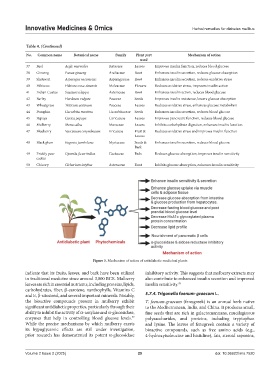
                                         Figure 5. Mechanism of action of antidiabetic medicinal plants


            indicate that its fruits, leaves, and bark have been utilized   inhibitory activity. This suggests that mulberry extracts may
            in traditional medicine since around 3,000 BCE. Mulberry   also contribute to enhanced insulin secretion and improved
            leaves are rich in essential nutrients, including proteins, lipids,   insulin sensitivity. 78
            carbohydrates, fiber, β-carotene, xanthophylls, Vitamins C
            and E, β-sitosterol, and several important minerals. Notably,   5.7.4. Trigonella foenum-graecum L.
            the bioactive compounds present in mulberry exhibit   T. foenum-graecum (fenugreek) is an annual herb native
            significant antidiabetic properties, particularly through their   to the Mediterranean, India, and China. It produces small,
            ability to inhibit the activity of α-amylase and α-glucosidase,   fine seeds that are rich in galactomannans, mucilaginous
            enzymes that help in controlling blood glucose levels.    polysaccharides, and proteins, including tryptophan
                                                         77
            While the precise mechanisms by which mulberry exerts   and lysine. The leaves of fenugreek contain a variety of
            its hypoglycemic effects are still under investigation,   bioactive compounds, such as free amino acids (e.g.,
            prior research has demonstrated its potent  α-glucosidase   4-hydroxyisoleucine and histidine), fats, steroid saponins,


            Volume 2 Issue 2 (2025)                         29                               doi: 10.36922/imo.7520

