


Page 94 - IMO-2-2
P. 94
Innovative Medicines & Omics                                        Femtomolar inhibition of pseudoeriocitrin


                                                               twice for pseudoeriocitrin (except the first docking with
                                                               SoCOX1). As a result of the repeated computations, we
                                                               obtained different values for the free binding energy at the
                                                               end of the docking process.
                                                                 According to  Tables  1 and  2, neither eriocitrin nor
                                                               pseudoeriocitrin could bind to any  β-tubulin protein
                                                               (1OJ0,  6VAX,  and  EvTub) tested  in  this  study. The
                                                               homology model and Ramachandran plot of EvTub are
                                                               shown in Figure A3. However, pseudoeriocitrin did inhibit
                                                               1OJ0 (H. contortus β-tubulin), albeit with extremely low
                                                               free binding energy. This indicates that pseudoeriocitrin
                                                               does  not  have  a  toxic  effect  on  β-tubulin.  In  general,
                                                               β-tubulin  inhibition  is associated with  the prevention

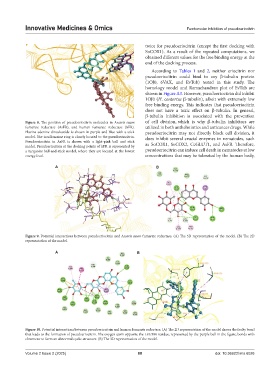
            Figure  8. The position of pseudoeriocitrin molecules in  Ascaris  suum   of cell division, which is why  β-tubulin inhibitors are
            fumarate reductase (AsFR), and human fumarate reductase (hFR).   utilized in both anthelmintics and anticancer drugs. While
            Flavine-adenine-dinucleotide is shown in purple and blue with a stick   pseudoeriocitrin may not directly block cell division, it
            model. The isoalloxazine ring is closely located to the pseudoeriocitrin.   does inhibit several crucial enzymes in nematodes, such
            Pseudoeriocitrin in AsFR is shown with a light-pink ball and stick
            model. Pseudoeriocitrin at the docking points of hFR is represented by   as SoCOX1, SoCOX2, CeGLUT1, and AsFR. Therefore,
            a turquoise ball-and-stick model, where they are located at the lowest   pseudoeriocitrin can induce cell death in nematodes at low
            energy level.                                      concentrations that may be tolerated by the human body,

                         A                                         B


            Figure 9. Potential interactions between pseudoeriocitrin and Ascaris suum fumarate reductase. (A) The 3D representation of the model. (B) The 2D
            representation of the model.

                         A                                 B


            Figure 10. Potential interactions between pseudoeriocitrin and human fumarate reductase. (A) The 2D representation of the model shows the faulty bond
            that leads to the formation of pseudoeriocitrin. The oxygen atom opposite the LEU306 residue, represented by the purple ball in the figure, bonds with
            chromene to form an abnormal cyclic structure. (B) The 3D representation of the model.


            Volume 2 Issue 2 (2025)                         88                               doi: 10.36922/imo.6026

