


Page 36 - IMO-2-3
P. 36
Innovative Medicines & Omics                            Tyrosine kinases: Structure, mechanism, and therapeutics


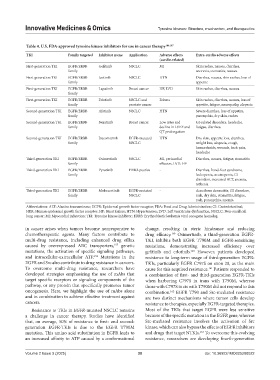
            Table 4. U.S. FDA-approved tyrosine kinase inhibitors for use in cancer therapy 146,147
            TKI               Family targeted  Inhibitor name  Application  Adverse effects   Extra-cardio adverse effects
                                                                     (cardio-related)
            First-generation TKI  EGFR/ERBB   Gefitinib  NSCLC       MI             Skin rashes, nausea, diarrhea,
                              family                                                anorexia, stomatitis, nausea
            First-generation TKI  EGFR/ERBB   Icotinib  NSCLC        HTN            Diarrhea, nausea, skin rashes, loss of
                              family                                                appetite
            First-generation TKI  EGFR/ERBB   Lapatinib  Breast cancer  HF, LVD     Skin rashes, diarrhea, nausea
                              family
            First-generation TKI  EGFR/ERBB   Erlotinib   NSCLC and   Edema         Skin rashes, diarrhea, nausea, loss of
                              family                    prostate cancer             appetite, fatigue, neuropathy, alopecia
            Second-generation TKI  EGFR/ERBB   Afatinib  NSCLC       HTN            Severe diarrhea, loss of appetite,
                              family                                                paronychia, dry skin, rashes
            Second-generation TKI  EGFR/ERBB   Neratinib  Breast cancer  Low rates and   GI-related disorders, headache,
                              family                                 decline in LVEF and   fatigue, diarrhea
                                                                     QT prolongation
            Second-generation TKI  EGFR/ERBB   Dacomitinib   EGFR-mutated   HTN     Dry skin, appetite loss, diarrhea,
                              family                    NSCLC                       weight loss, alopecia, cough,
                                                                                    hemorrhoids, wounds, back pain,
                                                                                    headache
            Third-generation TKI  EGFR/ERBB   Osimertinib  NSCLC     MI, pericardial   Diarrhea, nausea, fatigue, stomatitis
                              family                                 effusion, LVD, HF
            Third-generation TKI  EGFR/ERBB   Pyrotinib  HER2-postive   -           Diarrhea, hand-foot syndrome,
                              family                                                leukopenia, neutropenia, GI
                                                                                    disorders, increased ALT, anemia,
                                                                                    asthenia
            Third-generation TKI  EGFR/ERBB   Mobocertinib  EGFR-mutated   -        Acneiform dermatitis, GI disorders,
                              family                    NSCLC                       rash, dry skin, stomatitis, fatigue,
                                                                                    rash, paronychia, anemia
            Abbreviations: ALT: Alanine transaminase; EGFR: Epidermal growth factor receptor; FDA: Food and Drug Administration; GI: Gastrointestinal;
            HER: Human epidermal growth factor receptor; HF: Heart failure; HTN: Hypertension; LVD: Left ventricular dysfunction; NSCLC: Non-small cell
            lung cancer; MI: Myocardial infarction; TKI: Tyrosine kinase inhibitor; ERBB: Erythroblastic leukemia viral oncogene homolog.

            in cancer arises when tumors become nonresponsive to   change, resulting in steric hindrance and reducing
            chemotherapeutic  agents.  Many  factors  contribute  to   drug efficacy.  Osimertinib, a third-generation EGFR-
                                                                          159
            multi-drug resistance, including enhanced drug efflux   TKI,  inhibits  both EGFR  T790M  and EGFR-sensitizing
            caused by overexpressed ABC transporters,  genetic   mutations,  demonstrating increased  efficiency  over
                                                  157
            mutations, the activation of specific signaling pathways,   gefitinib and erlotinib.  However, patients developed
                                                                                  160
            and intracellular-extracellular ATP.  Mutations in  the   resistance to long-term usage of third-generation EGFR-
                                         158
            EGFR and Src also contribute to drug resistance in cancers.   TKIs, particularly EGFR C797S on exon 20, as the main
            To overcome multi-drug resistance, researchers have   cause for this acquired resistance.  Patients responded to
                                                                                          161
            developed strategies emphasizing the use of mAbs that   a combination of first- and third-generation EGFR-TKIs
            target specific receptors or signaling components of the   when  harboring  C797S  in  trans  with  T790M,  whereas
            pathway, or any protein that specifically promotes tumor   those with C797S in cis with T790M did not respond to this
            oncogenesis. Here, we highlight the use of mAbs alone   combination.  EGFR T790 and Src-mediated resistance
                                                                         162
            and in combination to achieve effective treatment against   are two distinct mechanisms where tumor cells develop
            cancers.                                           resistance to therapies, especially EGFR-targeted therapies.
              Resistance to TKIs in EGFR-mutated NSCLC remains   Most of the TKIs that target EGFR were less sensitive
            a challenge in cancer therapy. Studies have identified   because of the specific mutation in the EGFR gene, whereas
            that, on average, 50% of resistance to first- and second-  Src-mediated resistance involves the activation of Src
            generation EGFR-TKIs is due to the EGFR T790M      kinase, which can also bypass the effects of EGFR inhibitors
                                                                                      163
            mutation. This amino acid substitution in EGFR leads to   and drugs that target NTKIs.  To overcome this evolving
            an increased affinity to ATP caused by a conformational   resistance, researchers are developing fourth-generation

            Volume 2 Issue 3 (2025)                         30                          doi: 10.36922/IMO025200022

