


Page 123 - ITPS-7-1
P. 123
INNOSC Theranostics and
            Pharmacological Sciences                                            Repurposed Drugs as inhibitors of Pfmrk


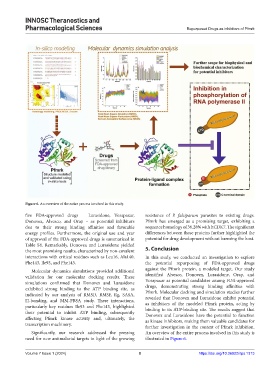
            Figure 6. An overview of the entire process involved in this study.
            five FDA-approved drugs – Lurasidone, Vorapaxar,   resistance of  P. falciparum parasites to existing drugs.
            Donovex, Alvesco, and Orap – as potential inhibitors   Pfmrk has emerged as a promising target, exhibiting a
            due to their strong binding affinities and favorable   sequence homology of 36.28% with hCDK7. The significant
            energy profiles. Furthermore, the original use and year   differences between these proteins further highlighted the
            of approval of the FDA-approved drugs is summarized in   potential for drug development without harming the host.
            Table S4. Remarkably, Donovex and Lurasidone yielded
            the most promising results, characterized by non-covalent   5. Conclusion
            interactions with critical residues such as Leu16, Ala140,   In this study, we conducted an investigation to explore
            Phe143, Ile93, and Phe143.                         the potential repurposing of FDA-approved drugs
              Molecular dynamics simulations provided additional   against the Pfmrk protein, a modeled target. Our study
            validation for our molecular docking results. These   identified Alvesco, Donovex, Lurasidone, Orap, and
            simulations confirmed that Donovex and Lurasidone   Vorapaxar as potential candidates among FDA-approved
            exhibited strong binding to the ATP binding site, as   drugs, demonstrating strong binding affinities with
            indicated by our analysis of RMSD, RMSF, Rg, SASA,   Pfmrk. Molecular docking and simulation studies further
                                                               revealed that Donovex and Lurasidone exhibit potential
            H-bonding, and MM-PBSA study. These interactions,
            particularly  key residues  Ile93  and  Phe143,  highlighted   as inhibitors of the modeled Pfmrk protein, acting by
                                                               binding to its ATP-binding site. The results suggest that
            their potential to inhibit ATP binding, subsequently   Donovex and Lurasidone have the potential to function
            affecting Pfmrk kinase activity and, ultimately, the   as kinase inhibitors, making them valuable candidates for
            transcription machinery.                           further investigation in the context of Pfmrk inhibition.

              Significantly, our research addressed the pressing   An overview of the entire process involved in this study is
            need for new antimalarial targets in light of the growing   illustrated in Figure 6.


            Volume 7 Issue 1 (2024)                         8                         https://doi.org/10.36922/itps.1313

