


Page 46 - ITPS-7-1
P. 46
INNOSC Theranostics and
            Pharmacological Sciences                                                Anticancer activity of cyanobacteria


            Table 1. Classification of cyanobacteria [13]
            No.           Order                Species                  Environment                 Morphology
            1             Nostocales           Anabaena sp.             Freshwater                  Filamentous
                                               Nostoc sp.                                           Terrestrial
            2             Chroococcales        Microcystis sp.          Freshwater                  Unicellular
                                               Synechococcus sp.        Marine water
                                               Synechocystis sp.        Freshwater
            3             Pleurocapsales       Hyella caespitosa        Marine water                Unicellular
            4             Stigonematales       Fischerella muscicola    Freshwater                  Filamentous
            5             Oscillatoriales      Oscillatoria sp.         Freshwater                  Filamentous
                                               Lyngbya majuscula        Tropical marine water


                                                                                        [14]
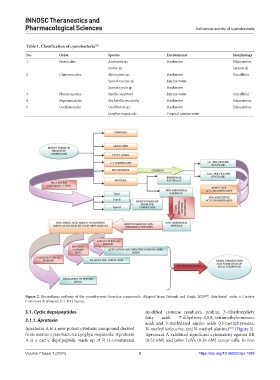
            Figure 2. Biosynthesis pathway of the cyanobacteria bioactive compounds. Adapted from Pattnaik and Singh, 2020 , distributed under a Creative
            Commons Attribution (CC BY) license.
            3.1. Cyclic depsipeptides                          modified cysteine residues), proline, 3-dihydroxyliety
                                                               fatty  acid,  7-dihydroxy-2,5,8,-tetramethylnonenoic
            3.1.1. Apratoxin
                                                               acid, and 3-methylated amino acids (O-methyltyrosine,
            Apratoxin A is a new potent cytotoxic compound derived   N-methyl isoleucine, and N-methyl-alanine)  (Figure 3).
                                                                                                  [16]
            from marine cyanobacteria Lyngbya majuscula. Apratoxin   Apratoxin A exhibited significant cytotoxicity against KB
            A is a cyclic depsipeptide made up of R (â-unsaturated   (0.52 nM) and colon LoVo (0.36 nM) cancer cells. In vivo

            Volume 7 Issue 1 (2024)                         3                         https://doi.org/10.36922/itps.1388

