


Page 75 - ITPS-7-1
P. 75
INNOSC Theranostics and
            Pharmacological Sciences                                     Docking study of quinoline-3-carbaldehyde derives


                                                               A
               A


              B
                                                               B


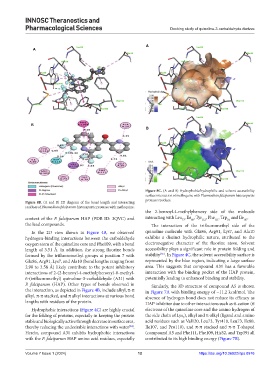
                                                               Figure 8C. (A and B) Hydrophobic/hydrophilic and solvent accessibility
                                                               surface interaction of mefloquine with Plasmodium falciparum histoaspartic
                                                               protease residues.
            Figure  8B. (A and B) 2D  diagram of the bond length and interacting
            residues of Plasmodium falciparum histoaspartic protease with mefloquine.
                                                               the  2-benzoyl-4-methylphenoxy  side  of  the  molecule
            context of the P. falciparum HAP (PDB ID: 3QVC) and   interacting with Leu , Ile , Tyr , Phe , Trp  and Ile .
                                                                                  80
                                                                                       112
                                                                                            111
                                                                                                  39,
                                                                                                         107
                                                                              73
            the lead compounds.                                  The interaction of the trifluoromethyl side of the
              In the 2D view shown in  Figure  4B, we observed   quinoline molecule with Glu86, Arg91, Lys7, and Ala10
            hydrogen-binding interactions between the carbaldehyde   exhibits a distinct hydrophilic nature, attributed to the
            oxygen atom of the quinoline core and Phe109, with a bond   electronegative  character  of the  fluorine  atom.  Solvent
            length of 3.51 Å. In addition, the strong fluorine bonds   accessibility plays a significant role in protein folding and
                                                                     [35]
            formed by the trifluoromethyl groups at position 7 with   stability . In Figure 4C, the solvent accessibility surface is
            Glu86, Arg91, Lys7, and Ala10 (bond lengths ranging from   represented by the blue region, indicating a large surface
            2.98 to 3.58 Å) likely contribute to the potent inhibitory   area.  This  suggests  that  compound A31  has  a  favorable
            interactions of 2-(2-benzoyl-4-methylphenoxy)-8-methyl-  interaction with the binding pocket of the HAP protein,
            6-(trifluoromethyl) quinoline-3-carbaldehyde (A31) with   potentially leading to enhanced binding and stability.
            P. falciparum (HAP). Other types of bonds observed in   Similarly, the 3D structure of compound A5 is shown
            the interaction, as depicted in Figure 4B, include alkyl, π-π   in Figure 7A with binding energy of −11.2 kcal/mol. The
            alkyl, π-π stacked, and π alkyl interactions at various bond   absence of hydrogen bond does not reduce its efficacy as
            lengths with residues of the protein.              HAP inhibitor due to other interactions such as π-cation (π

              Hydrophobic interactions (Figure 4C) are highly crucial   electrons of the quinoline core and the amino hydrogen of
            for the folding of proteins, especially in keeping the protein   the side chain of Lys ), alkyl and π-alkyl (ligand and amino
                                                                               7
            stable and biologically active through decrease in surface area,   acid residues such as Val120, Leu73, Tyr410, Leu73, Ile80,
            thereby reducing the undesirable interactions with water .   Ile107, and Pro110), and π-π stacked and π-π T-shaped
                                                        [34]
            Herein, compound A31 exhibits hydrophobic interactions   (compound A5 and Phe111, Phe109, His32, and Trp39) all
            with the P. falciparum HAP amino acid residues, especially   contributed to its high binding energy (Figure 7B).


            Volume 7 Issue 1 (2024)                         12                        https://doi.org/10.36922/itps.0976

