


Page 70 - ITPS-7-1
P. 70
INNOSC Theranostics and
            Pharmacological Sciences                                     Docking study of quinoline-3-carbaldehyde derives


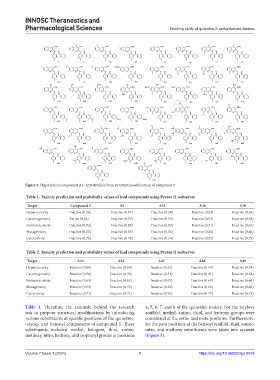
            Figure 5. Hypothetical compounds A1–A50 obtained from structural modifications of compound 5.


            Table 1. Toxicity prediction and probability values of lead compounds using Protox II webserver
             Target            Compound 5           A5               A31              A36              A20
            Hepatotoxicity     Inactive (0.56)  Inactive (0.97)  Inactive (0.50)   Inactive (0.52)  Inactive (0.54)
            Carcinogenicity    Active (0.54)    Inactive (0.57)  Inactive (0.52)   Inactive (0.52)  Inactive (0.54)
            Immunotoxicity     Inactive (0.83)  Inactive (0.99)  Inactive (0.82)   Inactive (0.71)  Inactive (0.67)
            Mutagenicity       Inactive (0.55)  Inactive (0.85)  Inactive (0.56)   Inactive (0.56)  Inactive (0.60)
            Cytotoxicity       Inactive (0.75)  Inactive (0.78)  Inactive (0.74)   Inactive (0.75)  Inactive (0.75)

            Table 2. Toxicity prediction and probability values of lead compounds using Protox II webserver

             Target               A33              A34              A45               A48              A49
            Hepatotoxicity     Inactive (0.60)  Inactive (0.60)  Inactive (0.52)  Inactive (0.54)   Inactive (0.54)
            Carcinogenicity    Inactive (0.56)  Inactive (0.56)  Inactive (0.51)  Inactive (0.41)   Inactive (0.54)
            Immunotoxicity     Inactive (0.65)  Inactive (0.62)  Inactive (0.67)  Inactive (0.69)   Inactive (0.60)
            Mutagenicity       Inactive (0.53)  Inactive (0.53)  Inactive (0.52)  Inactive (0.60)   Inactive (0.60)
            Cytotoxicity       Inactive (0.71)  Inactive (0.71)  Inactive (0.76)  Inactive (0.75)   Inactive (0.75)


            Table 1. Therefore, the rationale behind the research   4, 5, 6, 7, and 8 of the quinoline moiety. For the tolyloxy
            was  to propose  structural  modifications by introducing   scaffold, methyl, amino, thiol, and hydroxy groups were
            various substituents at specific positions of the quinoline,   considered at the ortho and meta positions. Furthermore,
            tolyoxy, and benzoyl components of compound 5. These   for the para positions of the benzoyl scaffold, thiol, amino,
            substituents included methyl, halogens, thiol, amino,   nitro, and methoxy substituents were taken into account
            methoxy, nitro, hydroxy, and isopropyl groups at positions   (Figure 5).


            Volume 7 Issue 1 (2024)                         7                         https://doi.org/10.36922/itps.0976

