


Page 67 - ITPS-7-1
P. 67
INNOSC Theranostics and
            Pharmacological Sciences                                     Docking study of quinoline-3-carbaldehyde derives


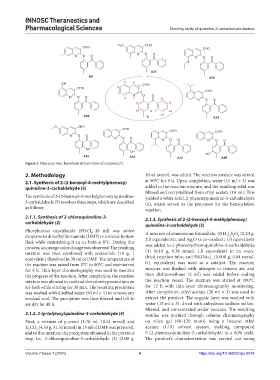
            Figure 3. Nine non-toxic hypothetical derivatives of compound 5.

            2. Methodology                                     10.44 mmol), was added. The reaction mixture was stirred
            2.1. Synthesis of 2-(2-benzoyl-4-methylphenoxy)    at 90°C for 9 h. Upon completion, water (15 ml × 3) was
            quinoline-3-carbaldehyde (5)                       added to the reaction mixture, and the resulting solid was
                                                               filtered and recrystallized from ethyl acetate (10 ml). This
            The synthesis of 2-(2-benzoyl-4-methylphenoxy)quinoline-  yielded a white solid, 2-phenoxyquinoline-3-carbaldehyde
            3-carbaldehyde (5) involves three steps, which are described   (4), which served as the precursor for the benzoylation
            as follows:                                        reaction.

            2.1.1. Synthesis of 2-chloroquinoline-3-           2.1.3. Synthesis of 2-(2-benzoyl-4-methylphenoxy)
            carbaldehyde (2)                                   quinoline-3-carbaldehyde (5)
            Phosphorous oxychloride (POCl ; 28  ml) was added   A mixture of ammonium thiosulfate, (NH ) S O  (0.24 g,
                                        3
            dropwise to dimethylformamide (DMF) in a round-bottom   2.0 equivalents), and Ag O (a co-oxidant; 1.0 equivalent)
                                                                                                      8
                                                                                                 4 2 2
            flask while maintaining it an ice bath at 0°C. During this   was added to 2-phenoxychloroquinoline-3-carbaldehyde
                                                                                   2
            process, an orange color change was observed. The resulting
            mixture was then combined with acetanilide (10  g, 1   (4) (0.10  g, 0.38 mmol, 1.0 equivalent) in an oven-
            equivalent) dissolved in 30 ml of DMF. The temperature of   dried reaction tube, and Pd(OAc)  (0.008 g, 0.04 mmol,
                                                                                           2
            the reaction was raised from 0°C to 80°C and maintained   0.1 equivalent) was used as a catalyst. The reaction
            for 9 h. Thin-layer chromatography was used to monitor   mixture was flushed with nitrogen to remove air, and
            the progress of the reaction. After completion, the reaction   then  dichloroethane  (2  ml)  was  added  before  sealing
            mixture was allowed to cool and then slowly poured into an   the reaction vessel. The mixture was stirred at 100°C
            ice bath while stirring for 30 min. The resulting precipitate   for 12  h with thin-layer chromatography monitoring.
            was washed with distilled water (50 ml × 5) to remove any   After completion, ethyl acetate (20 ml × 3) was used to
            residual acid. The precipitate was then filtered and left to   extract the product. The organic layer was washed with
            air-dry for 48 h.                                  water (15 ml × 3), dried with anhydrous sodium sulfate,
                                                               filtered, and concentrated under vacuum. The resulting
            2.1.2. 2-(p-tolyloxy)quinoline-3-carbaldehyde (4)  residue was purified through column chromatography

            Next,  a mixture  of  p-cresol  (1.70  ml,  10.44 mmol)  and   on silica gel (60–120 mesh) using a hexane:  ethyl
            K CO  (4.33 g, 31.32 mmol) in 15 ml of DMF was prepared,   acetate (1:19) solvent system, yielding compound
             2
                 3
            and to this mixture, the precipitate obtained in the previous   5 (2-phenoxyquinoline-3-carbaldehyde) in a 60% yield.
            step, i.e., 2-chloroquinoline-3-carbaldehyde (2) (2.00  g,   The product’s characterization was carried out using

            Volume 7 Issue 1 (2024)                         4                         https://doi.org/10.36922/itps.0976

