


Page 69 - ITPS-7-1
P. 69
INNOSC Theranostics and
            Pharmacological Sciences                                     Docking study of quinoline-3-carbaldehyde derives


                                                                              [20]
            A                                                  drug development . The SMILES representations of the
                                                               compounds were submitted to the web server, and the
                                                               resulting data were carefully extracted and comprehensively
                                                               examined.
                                                               2.7. Molecular docking study
                                                               To evaluate the inhibitory potential of synthesized
                                                               compound 5, as well as the selected hypothetical
                                                               compounds, docking simulations were performed against
                                                               HAP using the PyRx 0.8 AutoDock Vina Wizard. The
                                                               macromolecules were converted to Autodock format, and a
                                                               flexible ligand to rigid protein approach was employed. All
            B                                                  possible binding sites on the target protein were explored
                                                               during the docking process. The docking calculations
                                                               were performed within a cubic grid of dimensions
                                                               90 × 75 × 60 centered on the protein, encompassing the
                                                               entire protein structure. This process lasted approximately
                                                               1 h. A grid spacing of 1.00 Å was utilized to generate the
                                                               grid maps using the autogrid module of AutoDock Tools.
                                                               Each ligand underwent nine independent runs to ensure
                                                               accuracy.
                                                                 Based  on the  identified potential  binding sites,
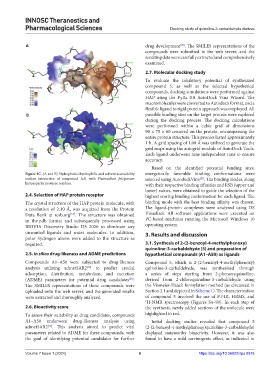
            Figure 4C. (A and B) Hydrophobic/hydrophilic and solvent accessibility   energetically  favorable binding  conformations  were
            surface interaction of compound A31 with  Plasmodium falciparum   selected using AutodockVina . The binding modes, along
                                                                                      [21]
            histoaspartic protease residues.                   with their respective binding affinities and RSB (upper and
                                                               lower) values, were obtained to guide the selection of the
            2.4. Selection of HAP protein receptor             highest scoring binding conformation for each ligand. The
            The crystal structure of the HAP protein molecule, with   binding mode with the best binding affinity was chosen.
            a resolution of 2.10 Å, was acquired from the Protein   The ligand-protein complexes were analyzed using DS
            Data Bank at rcsb.org [18] . The structure was obtained   Visualizer. All software applications were executed on
            in the.pdb format and subsequently processed using   PC-based machines running the Microsoft Windows 10
            BIOVIA Discovery Studio DS 2020 to eliminate any   operating system.
            unwanted ligands and water molecules. In addition,   3. Results and discussion
            polar hydrogen atoms were added to the structure as
            required.                                          3.1. Synthesis of 2-(2-benzoyl-4-methylphenoxy)
                                                               quinoline-3-carbaldehyde (5) and preparation of
            2.5. In silico drug-likeness and ADME predictions  hypothetical compounds (A1–A50) as ligands
            Compounds A1–A50 were subjected to drug-likeness   Compound 5, which is 2-(2-benzoyl-4-methylphenoxy)
            analysis utilizing admetSAR2  to predict crucial   quinoline-3-carbaldehyde, was synthesized through
                                      [19]
            adsorption, distribution, metabolism, and excretion   a series of steps starting from 2-phenoxyquinoline,
                                                        [20]
            (ADME) parameters for potential drug candidates .   derived  from  2-chloroquinoline-3-carbaldehyde  using
            The  SMILES representations  of  these  compounds  were   the Vismeier-Haack formylation method (as discussed in
            uploaded onto the web server, and the generated results   Section 2.1 and depicted in Scheme 1). The characterization
            were extracted and thoroughly analyzed.            of compound 5 involved the use of FT-IR, HRMS, and
                                                               1 H-NMR spectroscopy (Figures S4–S9). In each step of
            2.6. Bioactivity score                             the synthesis, newly added sections of the molecule were
            To assess their suitability as drug candidates, compounds   highlighted in red.
            A1–A50 underwent drug-likeness analysis using        Initial docking studies revealed that compound 5
            admetSAR2 . This analysis aimed to predict vital   (2-(2-benzoyl-4-methylphenoxy)quinoline-3-carbaldehyde)
                     [19]
            parameters related to ADME for these compounds, with   displayed noteworthy bioactivity. However, it was also
            the goal of identifying potential candidates for further   found to have a mild carcinogenic effect, as indicated  in


            Volume 7 Issue 1 (2024)                         6                         https://doi.org/10.36922/itps.0976

