


Page 74 - ITPS-7-1
P. 74
INNOSC Theranostics and
            Pharmacological Sciences                                     Docking study of quinoline-3-carbaldehyde derives


            A                                                  A


                                                               B
            B


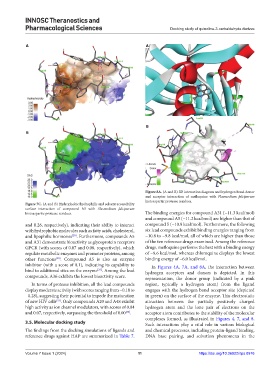
                                                               Figure 8A. (A and B) 3D interaction diagram and hydrogen bond donor
                                                               and acceptor interaction of mefloquine with  Plasmodium falciparum
                                                               histoaspartic protease residues.
            Figure 7C. (A and B) Hydrophobic/hydrophilic and solvent accessibility
            surface interaction of compound A5 with  Plasmodium  falciparum
            histoaspartic protease residues.                   The binding energies for compound A31 (−11.3 kcal/mol)
                                                               and compound A5 (−11.2 kcal/mol) are higher than that of
            and 0.26, respectively), indicating their ability to interact   compound 5 (−10.9 kcal/mol). Furthermore, the following
            with hydrophobic molecules such as fatty acids, cholesterol,   six lead compounds exhibit binding energies ranging from
                                [29]
            and lipophilic hormones . Furthermore, compounds A5   −10.8 to −9.8 kcal/mol, all of which are higher than those
            and A31 demonstrate bioactivity as glycoprotein receptors   of the ten reference drugs examined. Among the reference
            GPCR (with scores of 0.07 and 0.08, respectively), which   drugs, mefloquine performs the best with a binding energy
            regulate metabolic enzymes and promoter proteins, among   of −9.6 kcal/mol, whereas chloroquine displays the lowest
            other functions . Compound A5 is also an enzyme    binding energy of −6.0 kcal/mol.
                         [30]
            inhibitor (with a score of 0.1), indicating its capability to   In  Figures  4A,  7A, and  8A, the interaction between
            bind to additional sites on the enzyme . Among the lead   hydrogen acceptors and donors is depicted. In this
                                          [31]
            compounds, A36 exhibits the lowest bioactivity score.  representation, the donor group (indicated by a pink
              In terms of protease inhibition, all the lead compounds   region, typically a hydrogen atom) from the ligand
            display moderate activity (with scores ranging from −0.18 to   engages with the hydrogen bond acceptor site (depicted
            −0.28), suggesting their potential to impede the maturation   in green) on the surface of the enzyme. This electrostatic
            of new HIV cells . Only compounds A20 and A48 exhibit   attraction  between  the  partially  positively  charged
                         [32]
            high activity as ion channel modulators, with scores of 0.04   hydrogen atom and the lone pair of electrons on the
            and 0.07, respectively, surpassing the threshold of 0.00 .  acceptor atom contributes to the stability of the molecular
                                                      [33]
                                                               complexes formed, as illustrated in  Figures  4,  7, and  8.
            3.5. Molecular docking study                       Such interactions play a vital role in various biological
            The findings from the docking simulations of ligands and   and chemical processes, including protein-ligand binding,
            reference drugs against HAP are summarized in Table 7.   DNA  base  pairing,  and  solvation  phenomena  in  the


            Volume 7 Issue 1 (2024)                         11                        https://doi.org/10.36922/itps.0976

