


Page 122 - ITPS-7-2
P. 122
INNOSC Theranostics and
            Pharmacological Sciences                                          PI3K-α inhibitors for cancer immunotherapy


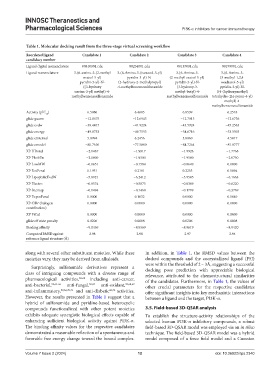
            Table 1. Molecular docking result from the three‑stage virtual screening workflow
            Reordered ligand        Candidate 1         Candidate 2          Candidate 3        Candidate 4
            candidacy number
            Ligand digital nomenclature  00310001.cdx   00254001.cdx        00137001.cdx       00199001.cdx
            Ligand nomenclature  3-(6-amino-5-(2-methyl   3-(6-Amino-5-(isoxazol-5-yl)   3-[6-Amino-5-   3-(6-Amino-5-
                                    oxazol-5-yl)       pyridin-3-yl)-N-   (2-methyl-oxazol-5-yl)-   (3-methyl-1,2,4-
                                   pyridin-3-yl)-N-   (2-hydroxy-2-methylpropyl)   pyridin-3-yl]-N-   oxadiazol-5-yl)
                                    ((3-hydroxy    -4-methylbenzenesulfonamide  (3-hydroxy-3-   pyridin-3-yl)-N-
                                 oxetan-3-yl) methyl)-4-                   methyl-butyl)-4-   ((4-(hydroxymethyl)
                               methylbenzenesulfonamide                 methylbenzenesulfonamide  tetrahydro-2H-pyran-4-yl)
                                                                                                methyl)-4-
                                                                                           methylbenzenesulfonamide
            Activity (pIC )           6.5086              6.4685               6.8539             6.2518
                     50
            glide gscore             −12.8675            −12.6943             −12.7015           −12.6736
            glide evdw               −38.4417            −41.9224             −43.5924           −45.2563
            glide energy             −49.8733            −49.7553             −54.6716           −53.5503
            glide einternal           5.0994              6.2456               5.8060             4.5817
            glide emodel             −80.7610            −77.5800             −84.7264           −81.8777
            XP HBond                  −2.1467             −1.9817             −1.9926            −1.7768
            XP PhobEn                 −2.0000             −1.9500             −1.9500            −2.0750
            XP LowMW                  −0.0651             −0.1584             −0.0649             0.0000
            XP RotPenal               0.1931              0.2181               0.2253             0.1894
            XP LipophilicEvdW         −5.8921             −6.2412             −5.9585            −6.1663
            XP Electro                −0.8574             −0.5875             −0.8309            −0.6220
            XP Sitemap                −0.1494             −0.1468             −0.1799            −0.3769
            XP ExposPenal             0.0000              0.1032               0.0000             0.1040
            XP ClBr (halogen          0.0000              0.0000               0.0000             0.0000
            contribution)
            XP PiCat                  0.0000              0.0000               0.0000             0.0000
            glide eff state penalty   0.0206              0.0008               0.0206             0.0008
            Binding affinity          −9.0456             −8.9569             −8.9619            −8.9420
            Computed RMSD against      2.98                2.98                2.97                2.94
            reference ligand structure (Å)

            along with several other substituent moieties. While these   In addition, in  Table 1, the RMSD values between the
            moieties vary, they may be derived from alkaloids.  docked compounds and the cocrystallized ligand (P5J)
                                                               were within the threshold of 2 – 3Å, suggesting a successful
              Surprisingly, sulfonamide derivatives represent a   docking pose prediction with appreciable biological
            class of intriguing compounds with a diverse range of   relevance, attributed to the chemostructural similarities
            pharmacological  activities, 58-60   including  anti-cancer,   of the candidates. Furthermore, in Table 1, the values of
            anti-bacterial, 59,61-66  anti-fungal, 59,67  anti-oxidant, 59,68,69    other crucial parameters for the respective candidates
            anti-inflammatory, 59,62,70,71  and anti-diabetic 60,72  activities.   offer significant insights into key mechanistic interactions
            However, the results presented in Table 1 suggest that a   between a ligand and the target, PI3K-α.
            hybrid of sulfonamide and pyridine-based heterocyclic
            compounds  functionalized  with  other  potent  moieties   3.5. Field-based 3D-QSAR analysis
            exhibits adequate synergistic biological effects capable of   To establish the structure-activity relationships of the
            enhancing sufficient biological activity against PI3K-α.   selected human PI3K-α inhibitory compounds, a robust
            The binding affinity values for the respective candidates   field-based 3D-QSAR model was employed via an in silico
            demonstrated a reasonable reflection of a spontaneous and   technique. The field-based 3D-QSAR model was a hybrid
            favorable free energy change toward the bound complex.   model composed of a force field model and a Gaussian


            Volume 7 Issue 2 (2024)                         12                               doi: 10.36922/itps.2340

