


Page 81 - ITPS-8-3
P. 81
INNOSC Theranostics and
            Pharmacological Sciences                                           Activity of green-synthesized nanoparticles


                         A                                       B


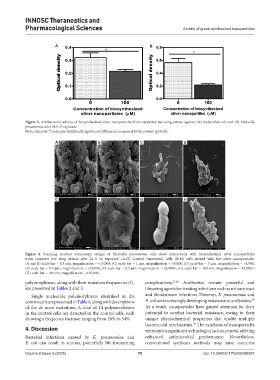
            Figure 3. Antibacterial activity of biosynthesized silver nanoparticles from carpenter bee wing extract against (A) Escherichia coli and (B) Klebsiella
            pneumoniae after 24 h of exposure
            Note: Asterisk (*) indicates statistically significant differences compared to the control (p<0.05).

                         A                 B                 C                 D


                         E                 F                 G                 H


            Figure  4. Scanning electron microscopy images of  Klebsiella  pneumoniae cells  show interactions with biosynthesized silver nanoparticles
            from  carpenter  bee  wing  extract  after  24  h  of  exposure.  (A-D)  Control  (untreated)  cells;  (E-H)  cells  treated  with  the  silver  nanoparticles.
            (A and B) Scale bar = 0.5 µm, magnification = ×15,000; (C) scale bar = 1 µm, magnification = ×9,000; (D) scale bar = 5 µm, magnification = ×1,900;
            (E) scale bar = 0.5 µm, magnification = ×25,000; (F) scale bar = 0.5 µm, magnification = 22,000×; (G) scale bar = 100 nm, magnification = 45,000×;
            (H) scale bar = 100 nm, magnification = ×35,000.
            polymorphisms, along with their mutation frequencies (f),   complications. 27,28   Antibiotics  remain  powerful  and
            are presented in Tables 2 and 3.                   lifesaving agents for treating infections such as urinary tract
              Single nucleotide polymorphisms identified in the   and bloodstream infections. However, K. pneumoniae and
                                                                                                            29
            control cells are presented in Table 4, along with descriptions   E. coli are increasingly developing resistance to antibiotics.
            of the de novo mutations. A  total of 14 polymorphisms   As a result, nanoparticles have gained attention for their
            in the control cells are detected in the control cells, each   potential to combat bacterial resistance, owing to their
            showing a frequency increase ranging from 20% to 34%.  unique  physiochemical  properties  that  enable  multiple
                                                                                   30
                                                               bactericidal mechanisms.  The synthesis of nanoparticles
            4. Discussion                                      represents a significant technological advancement, offering
            Bacterial infections caused by  K. pneumoniae and   enhanced antimicrobial performance. Nevertheless,
            E.  coli can result in serious, potentially life-threatening   conventional synthesis methods may raise concerns

            Volume 8 Issue 3 (2025)                         75                          doi: 10.36922/ITPS025080007

