


Page 56 - JCBP-2-3
P. 56
Journal of Clinical and
            Basic Psychosomatics                                   Proteomic analysis of mind-body psychotherapy in psoriasis


                         A                                   B


                         C
                                                               D


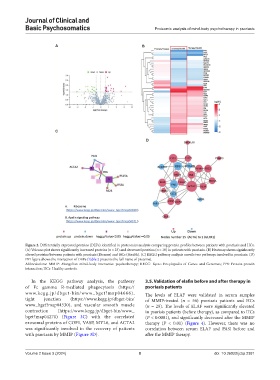
            Figure 2. Differentially expressed proteins (DEPs) identified in proteomics analysis comparing protein profiles between patients with psoriasis and HCs.
            (A) Volcano plot shows significantly increased proteins (n = 23) and decreased proteins (n = 18) in patients with psoriasis. (B) Heatmap shows significantly
            altered proteins between patients with psoriasis (Disease) and HCs (Health). (C) KEGG pathway analysis unveils two pathways involved in psoriasis. (D)
            PPI figure shows the interaction of DEPs (Table 2 presents the full name of proteins).
            Abbreviations: MMIP: Mongolian mind-body interactive psychotherapy; KEGG: Kyoto Encylopedia of Genes and Genomes; PPI: Protein-protein
            interaction; HCs: Healthy controls.

              In the KEGG pathway analysis, the pathway        3.5. Validation of elafin before and after therapy in
            of  Fc  gamma  R-mediated  phagocytosis  (https://  psoriasis patients
            www.kegg.jp/dbget-bin/www_bget?map04666),          The  levels  of  ELAF  were validated  in  serum  samples
            tight   junction   (https://www.kegg.jp/dbget-bin/  of MMIP-treated (n = 56) psoriasis patients and HCs
            www_bget?map04530), and vascular smooth muscle     (n = 29). The levels of ELAF were significantly elevated
            contraction   (https://www.kegg.jp/dbget-bin/www_  in psorisis patients (before therapy), as compared to HCs
            bget?map04270) (Figure  3C) with the correlated    (P < 0.0001), and significantly decreased after the MMIP
            exosomal proteins of COF1, VASP, MYL6, and ACTA2   therapy (P < 0.01) (Figure  4). However, there was no
            was significantly involved in the recovery of patients   correlation between serum ELAF and PASI before and
            with psoriasis by MMIP (Figure 3D).                after the MMIP therapy.


            Volume 2 Issue 3 (2024)                         8                               doi: 10.36922/jcbp.2381

