


Page 57 - JCBP-2-3
P. 57
Journal of Clinical and
            Basic Psychosomatics                                   Proteomic analysis of mind-body psychotherapy in psoriasis


                         A                                   B


                         C                                     D


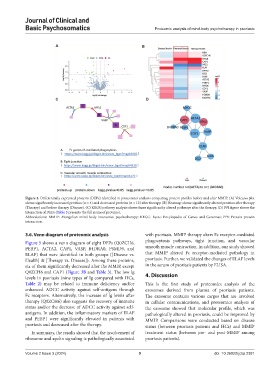
            Figure 3. Differentially expressed proteins (DEPs) identified in proteomics analysis comparing protein profiles before and after MMIP. (A) Volcano plot
            shows significantly increased proteins (n = 4) and decreased proteins (n = 12) after therapy. (B) Heatmap shows significantly altered proteins after therapy
            (Therapy) and before therapy (Disease). (C) KEGG pathway analysis shows three significantly altered pathways after the therapy. (D) PPI figure shows the
            interaction of DEPs (Table 3 presents the full name of proteins).
            Abbreviations: MMIP: Mongolian mind-body interactive psychotherapy; KEGG: Kyoto Encylopedia of Genes and Genomes; PPI: Protein-protein
            interaction.


            3.6. Venn diagram of proteomic analysis            with psoriasis. MMIP therapy alters Fc receptor-mediated
            Figure 5 shows a venn diagram of eight DEPs (Q0ZCH6,   phagocytosis pathways, tight junction, and vascular
            PEBP1, ACTA2, CAP1, VASP, B4DRA0, PSMD9, and       smooth muscle contraction. In addition, our study showed
            ELAF)  that  were  identified in  both  groups  ([Disease vs.   that  MMIP altered Fc  receptor-mediated  pathology in
            Health] & [Therapy vs. Disease]). Among these proteins,   psoriasis. Further, we validated the changes of ELAF levels
            six of them significantly decreased after the MMIP, except   in the serum of psoriasis patients by ELISA.
            Q0ZCH6 and CAP1 (Figure 3B and Table 3). The low Ig
            levels in psoriasis (nine types of Ig compared with HCs,   4. Discussion
            Table 2) may be related to immune deficiency and/or   This is the first study of proteomics analysis of the
            enhanced  ADCC  activity  against  self-antigens  through   exosomes derived from plasma of psoriasis patients.
            Fc receptors. Alternatively, the increase of Ig levels after   The exosome contains various cargos that are involved
            therapy (Q0ZCH6) also suggests the recovery of immune   in  cellular  communications,  and proteomics  analysis  of
            status and/or the decrease of ADCC activity against self-  the exosome showed that molecular profile, which was
            antigens. In addition, the inflammatory markers of ELAF   pathologically altered in psoriasis, could be improved by
            and PEBP1 were significantly elevated in patients with   MMIP. Comparisons were conducted based on disease
            psoriasis and decreased after the therapy.         status  (between  psoriasis  patients  and  HCs)  and  MMIP

              In summary, the results showed that the involvement of   treatment status (between pre-  and post-MMIP among
            ribosome and apelin signaling is pathologically associated   psoriasis patients).


            Volume 2 Issue 3 (2024)                         9                               doi: 10.36922/jcbp.2381

