


Page 53 - JCBP-3-3
P. 53
Journal of Clinical and
            Basic Psychosomatics                                                    Integrative neurodegenerative care


                                                               (i)  In ADR, key biomarkers include progressive thinning
                                                                  of the retinal nerve fiber layer, accumulation of
                                                                  amyloid-beta plaques, and microvascular alterations
                                                                  detected through OCT angiography.  These changes
                                                                                               7,10
                                                                  parallel cerebral amyloid pathology and are associated
                                                                  with hippocampal atrophy, a hallmark of ADR.
                                                               (ii)  In Parkinson’s disease, retinal changes are distinct, with
                                                                  dopaminergic dysfunction affecting the inner retinal
                                                                  layers. Specifically, the loss of retinal dopaminergic
                                                                  amacrine cells leads to retinal thinning that is more
                                                                  pronounced in the parafoveal region, rather than
                                                                  widespread across retinal layers as seen in ADR. 11
                                                               (iii) Lewy body dementia is characterized by pronounced
                                                                  retinal ganglion cell loss and significant disruptions
                                                                  in contrast sensitivity and color discrimination,
                                                                  reflecting the early involvement of the occipital lobe
                                                                  in disease progression. 12
                                                                 These distinctions highlight the importance of
                                                               integrating multiple biomarkers, rather than relying solely
                                                               on retinal imaging. By combining retinal imaging with
                                                               complementary assessments such as eye-tracking and
                                                               cognitive testing, clinicians may be able to refine diagnostic
                                                               accuracy and improve the differentiation of ADR from
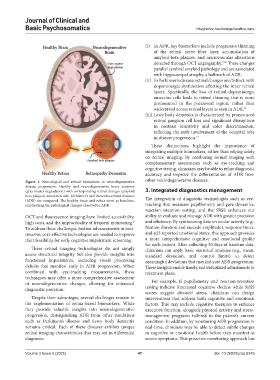
            Figure  1. Neurological and retinal biomarkers in neurodegenerative   other neurodegenerative diseases.
            disease  progression. Healthy and  neurodegenerative brain anatomy
            (gray matter degradation) with corresponding retinal changes (amyloid   3. Integrated diagnostics management
            beta plaques) associated with Alzheimer’s and dementia-related diseases   The integration of diagnostic technologies such as eye-
            (ADR) are compared. The healthy brain and retina serve as baselines,
            emphasizing the pathological changes observed in ADR.  tracking that measures pupillometry and gaze dynamics,
                                                               reaction-retention testing, and the SRSS enhances our
            OCT and fluorescence imaging have limited accessibility,   ability to evaluate and manage ADR with greater precision
            high costs, and the impracticality of frequent monitoring.    and efficiency. By synthesizing data on ocular activity (e.g.,
                                                          9
            To address these challenges, further advancements in non-  fixation duration and saccade amplitude), response times,
            invasive, cost-effective technologies are needed to improve   and self-reported emotional states, this approach provides
            their feasibility for early cognitive impairment screening.  a more comprehensive cognitive and emotional profile
                                                               for each patient. After collecting 30 days of baseline data,
              These retinal imaging technologies do not simply   clinicians can apply basic statistical analyses (e.g., mean,
            assess structural integrity but also provide insights into   standard deviation, and control limits) to detect
            functional impairments, including visual processing   meaningful deviations that may indicate ADR progression.
            deficits that manifest early in ADR progression. When   These insights enable timely, individualized adjustments to
            combined with eye-tracking measurements,  these    treatment plans.
            techniques may offer a more comprehensive assessment
            of neurodegenerative changes, allowing for enhanced   For  example,  if  pupillometry  and  reaction-retention
            diagnostic precision.                              testing  indicate  functional  cognitive  decline  while  SRSS
                                                               scores suggest elevated stress, clinicians can design
              Despite their advantages, several challenges remain in   interventions that address both cognitive and emotional
            the  implementation  of  retina-based  biomarkers.  While   factors. This may include cognitive therapies to enhance
            they provide valuable insights into neurodegenerative   executive function, alongside physical activity and stress-
            progression, distinguishing ADR from other conditions   management programs tailored to the patient’s current
            such as Parkinson’s disease and Lewy body dementia   condition. In addition, by monitoring ADR progression in
            remains  critical.  Each  of  these  diseases  exhibits  unique   real-time, clinicians may be able to detect subtle changes
            retinal imaging characteristics that may aid in differential   in cognitive or emotional health before they manifest as
            diagnosis:                                         severe symptoms. This proactive monitoring approach has


            Volume 3 Issue 3 (2025)                         47                              doi: 10.36922/jcbp.8349

