


Page 55 - JCBP-3-3
P. 55
Journal of Clinical and
            Basic Psychosomatics                                                    Integrative neurodegenerative care


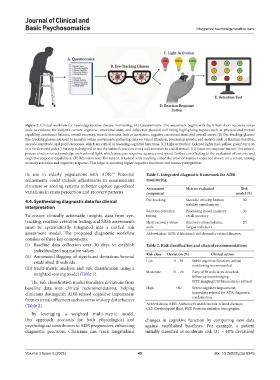
            Figure 2. Clinical workflow for neurodegenerative disease monitoring. (A) Questionnaire: The assessment begins with the 8-item short recovery-stress
            scale to evaluate the subject’s current cognitive, emotional state, and subjective physical well-being highlighting aspects such as physical and mental
            capability, emotional balance, overall recovery, muscle soreness, lack of activation, negative emotional state, and overall stress. (B) Eye-tracking glasses:
            Eye-tracking glasses are used to monitor retina movements, gathering data on visual attention, processing speeds, and metrics such as fixation duration,
            saccade amplitude, and pupil responses, which are critical in assessing cognitive functions. (C) Light activation: Colored lights (red, yellow, green) turn on
            in a randomized order. This step is designed to test the subject’s reaction times and attention to visual stimuli. (D) Reaction response button: The subject
            presses a button to acknowledge each colored light, which measures response accuracy and speed, further contributing to the evaluation of sensory and
            cognitive response capabilities. (E) Retention test: The subject is tasked with recalling either the color or number sequence shown on a screen, testing
            memory retention and cognitive response. This helps in assessing higher cognitive functions and memory integration.

            its use in elderly populations with ADR.  Potential   Table 1. Integrated diagnostic framework for ADR
                                                 19
            refinements could include adjustments in questionnaire   monitoring
            structure or scoring systems to better capture age-related   Assessment   Metrics evaluated  Risk
            variations in stress perception and recovery patterns.  component                        model (%)

            4.4. Synthesizing diagnostic data for clinical     Eye-tracking     Saccadic velocity, fixation   50
                                                                                stability, pupillometry
            interpretation
                                                               Reaction-retention   Processing speed, memory   30
            To ensure clinically actionable insights, data from eye-  testing   recall accuracy
            tracking, reaction-retention testing, and SRSS assessments   Short recovery-stress   Recovery-stress balance,   20
            must be systematically integrated into a unified risk   scale       fatigue indicators
            assessment model. The proposed diagnostic workflow   Abbreviation: ADR: Alzheimer’s and dementia-related diseases.
            consists of three key components:
            (i)  Baseline data collection over 30  days to establish   Table 2. Risk classification and clinical recommendations
               individualized normative values
            (ii)  Automated flagging of significant deviations beyond   Risk class  Deviation (%)  Clinical action
               established thresholds                          Low         0 – 30  Stable cognitive function; annual
            (iii) Multi-metric analysis and risk classification using a            monitoring recommended
               weighted scoring model (Table 1).               Moderate    31 – 60  Early ADR indicators detected;
                                                                                   follow-up neuroimaging
              The risk classification model translates deviations from             (PET imaging/CSF biomarkers) advised
            baseline data into clinical recommendations, helping   High     >60    Severe cognitive impairment;
            clinicians distinguish ADR-related cognitive impairment                immediate referral for ADR diagnostic
            from external influences such as stress or sleep disturbances          confirmation.
            (Table 2).                                         Abbreviations: ADR: Alzheimer’s and dementia-related diseases;
                                                               CSF: Cerebrospinal fluid; PET: Positron emission tomography.
              By leveraging a weighted multi-metric model,
            this approach accounts for both physiological and   changes in cognitive function by comparing new data
            psychological contributors to ADR progression, enhancing   against established baselines. For example, a patient
            diagnostic precision. Clinicians can track longitudinal   initially classified as moderate risk (31 – 60% deviation)


            Volume 3 Issue 3 (2025)                         49                              doi: 10.36922/jcbp.8349

