


Page 70 - JCTR-10-1
P. 70
66                        Zhuang et al. | Journal of Clinical and Translational Research 2024; 10(1): 62-71


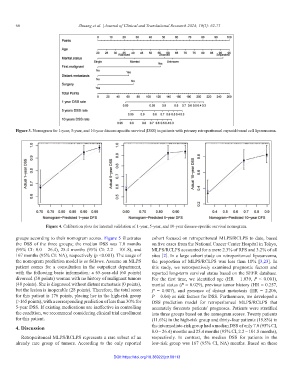
        Figure 3. Nomogram for 1-year, 5-year, and 10-year disease-specific survival (DSS) in patients with primary retroperitoneal myxoid/round cell liposarcoma.


                    Figure 4. Calibration plots for internal validation of 1-year, 5-year, and 10-year disease-specific survival nomogram.

        groups according to their nomogram scores. Figure 5 illustrates   cohort focused on retroperitoneal MLPS/RCLPS to date, based
        the DSS of the three groups; the median DSS was 7.0 months   on five cases from the National Cancer Center Hospital in Tokyo,
        (95% CI: 0.0 – 26.4), 25.4 months (95% CI: 2.2 – 101.8), and   MLPS/RCLPS accounted for a mere 2.3% of RPS and 3.2% of all
        167 months (95% CI: NA), respectively (p <0.001). The usage of   sites [2]. In a large cohort study on retroperitoneal liposarcoma,
        the nomogram prediction model is as follows. Assume an MLPS   the  proportion  of  MLPS/RCLPS  was  less  than  10%  [3,23].  In
        patient  comes  for  a  consultation  in  the  outpatient  department,   this  study,  we  retrospectively  examined  prognostic  factors  and
        with the following basic information: a 65-year-old (60 points)   reported long-term survival status based on the SEER database.
        divorced (50 points) woman with no history of malignant tumors   For  the  first  time,  we  identified  age  (HR  =  1.039,  P  <  0.001),
        (48 points). She is diagnosed without distant metastasis (0 points),   marital status (P = 0.029), previous tumor history (HR = 0.257,
        but the lesion is inoperable (28 points). Therefore, the total score   P  =  0.007),  and  presence  of  distant  metastasis  (HR  =  2.206,
        for this patient is 176 points, placing her in the high-risk group   P = 0.04) as risk factors for DSS. Furthermore, we developed a
        (>165 points), with a corresponding prediction of less than 30% for   DSS  prediction  model  for  retroperitoneal  MLPS/RCLPS  that
        5-year DSS. If existing medications are ineffective in controlling   accurately forecasts patients’ prognoses. Patients were stratified
        the condition, we recommend considering clinical trial enrollment   into three groups based on the nomogram scores. Twenty patients
        for this patient.                                       (11.6%) in the high-risk group and thirty-four patients (19.8%) in
        4. Discussion                                           the intermediate-risk group had a median DSS of only 7.0 (95% CI,
                                                                0.0 – 26.4) months and 25.4 months (95% CI, 2.2 – 101.8 months),
          Retroperitoneal MLPS/RCLPS represents a rare subset of an   respectively.  In  contrast,  the  median  DSS  for  patients  in  the
        already  rare  group  of  tumors.  According  to  the  only  reported   low-risk group was 167 (95% CI, NA) months. Based on these


                                                 DOI: https://doi.org/10.36922/jctr.00113

