


Page 62 - JCTR-10-2
P. 62
156                       Koschny et al. | Journal of Clinical and Translational Research 2024; 10(2): 151-158

                   A                                            localized synchronous squamous cell carcinomas of the esophagus
                                                                22  cm from the incisors and hypopharynx were treated  by
                                                                definitive chemoradiotherapy [27]. Definitive radiochemotherapy
                                                                in our patient  was, however, complicated  by impaired wound
                                                                healing, esophageal necrosis, fistula formation, and osteomyelitis.
                                                                   This study has several limitations. Despite the prospectively
                        B                                       collected data, we had no well-defined criteria for which techniques
                                                                and material to be used, for the time intervals of bougienage and
                                                                the additive treatments. Long-term follow-up data are needed to
                                                                demonstrate a long-term benefit even in the two patients with the
                                                                best result reported in this series. Due to the rarity of this treatment
                                                                modality, we were  only  able  to  provide  data  on  a  very  small
                                                                cohort. We propose to prospectively collect data in a multicenter
                                                                study  designed  with  a  predefined  instrumental  armamentarium,
                                                                treatment intervals, and outcome parameters.
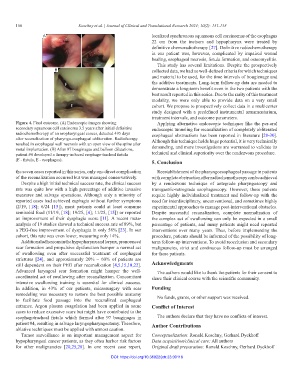
        Figure 4. Final outcome. (A) Endoscopic images showing     Applying  alternative  endoscopic  techniques  like  the  per-oral
        secondary squamous cell carcinoma 3.5 years after initial definitive   endoscopic tunneling for recanalization of completely obliterated
        radiochemotherapy of an oropharyngeal cancer, detected 495 days   esophageal obstructions has been reported in literature [28-30].
        after recanalization of pharyngo-esophageal obliteration. Radiotherapy   Although this technique holds huge potential, it is very technically
        resulted in esophageal wall necrosis with an open view of the spine after
        metal implantation. (B) After 97 bouginages and balloon dilatations,   demanding, and more investigations are warranted to validate its
        patient #4 developed a therapy-induced esophago-tracheal fistula   technical and clinical superiority over the rendezvous procedure.
        (F - fistula, E - esophagus).                           5. Conclusion

        the seven cases reported in this series, only one direct complication   Reestablishment of the pharyngoesophageal passage in patients
        of the recanalization occurred but was managed conservatively.  with complete obstruction after radiochemotherapy can be achieved
          Despite a high initial technical success rate, the clinical success   by  a  rendezvous  technique  of  antegrade  pharyngoscopy  and
        rate was quite low with a high percentage of additive invasive   transgastric-retrograde  esophagoscopy.  However, these  patients
        measures and salvage  operations. Although only a minority  of   require highly individualized  treatment  and follow-up with the
        reported cases had achieved euphagia without further symptoms   need for interdisciplinary, unconventional, and sometimes highly
        (2/19, [18]; 6/24 [15]), most patients  could at least consume   experimental approaches to manage post-interventional obstacles.
        semisolid food (11/19, [18]; 19/25, [4]; 11/25, [15]) or reported   Despite successful recanalization,  complete  normalization  of
        an  improvement  of their  dysphagia  score  [11]. A  recent  meta-  the complex act of swallowing can only be expected in a small
        analysis of 19 studies showed a technical success rate of 89%, but   percentage  of patients,  and  many  patients  might  need  repeated
        a PEG-free improvement of dysphagia in only 58% [23]. In our   interventions  over many years.  Thus, before implementing  the
        cohort, this rate was even lower, measuring only 14%.   procedure, patients should be informed of the possibility of long-
          Additional adhesions in the hypopharynx and larynx, pronounced   term follow-up interventions. To avoid reocclusion and secondary
        scar formation and propulsive dysfunction hamper a normal act   malignancies, strict and continuous follow-up must be arranged
        of swallowing  even  after  successful treatment  of esophageal   for these patients.
        strictures [24], and approximately 20% – 60% of patients  are
        still dependent on their PEG after recanalization [4,5,15,18,22].   Acknowledgments
        Advanced laryngeal scar formation might hamper the well-   The authors would like to thank the patients for their consent to
        coordinated act of swallowing after recanalization. Concomitant   share their clinical course with the scientific community.
        intensive  swallowing training  is essential  for clinical  success.
        In addition, in  43% of our patients,  microsurgery  with  scar   Funding
        remodeling was necessary to restore the best possible anatomy
        to facilitate  food passage into the recanalized  esophageal   No funds, grants, or other support was received.
        entrance. Argon plasma  coagulation  had  been  applied  in  some   Conflict of Interest
        cases to reduce excessive scars but might have contributed to the
        esophagotracheal  fistula  which  formed  after  97  bouginages  in   The authors declare that they have no conflicts of interest.
        patient #4, resulting in salvage laryngopharyngectomy. Therefore,   Author Contributions
        ablative techniques must be applied with utmost caution.
          Tumor surveillance  is an important management  aspect  for   Conceptualization: Ronald Koschny, Gerhard Dyckhoff
        hypopharyngeal cancer patients, as they often harbor risk factors   Data acquisition/clinical care: All authors
        for other malignancies  [20,25,26]. In one recent case report,   Original draft preparation: Ronald Koschny, Gerhard Dyckhoff
                                                DOI: https://doi.org/10.36922/jctr.23.00116

