


Page 66 - JCTR-10-2
P. 66
160                       Wang et al. | Journal of Clinical and Translational Research 2024; 10(2): 159-164


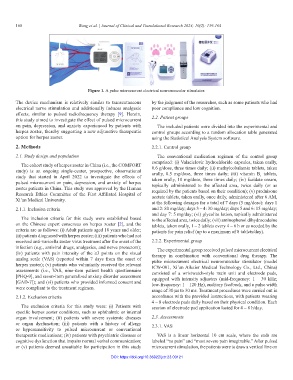
                                      Figure 1. A pulse microcurrent electrical neuromuscular stimulator.

        The  device  mechanism  is  relatively  similar  to  transcutaneous   by the judgment of the researcher, such as some patients who had
        electrical nerve stimulation and additionally induces analgesic   poor compliance and low cognition.
        effects,  similar  to  pulsed  radiofrequency  therapy  [9]. Herein,
        this study aimed to investigate the effect of pulsed microcurrent   2.2. Patient groups
        on pain, depression, and anxiety experienced by patients with   The included patients were divided into the experimental and
        herpes zoster, thereby suggesting a new adjunctive therapeutic   control groups according to a random allocation table generated
        option for herpes zoster.                               using the Statistical Analysis System software.
        2. Methods                                              2.2.1. Control group

        2.1. Study design and population                           The  conventional  medication  regimen  of the  control  group
                                                                comprised: (i) Valaciclovir hydrochloride capsules, taken orally,
          The cohort study of herpes zoster in China (i.e., the COMFORT   0.6 g/dose, three times daily; (ii) methylcobalamin tablets, taken
        study)  is  an  ongoing  single-center,  prospective,  observational   orally,  0.5  mg/dose,  three  times  daily;  (iii)  vitamin  B   tablets,
        study  that  started  in  April  2022  to  investigate  the  effects  of   taken orally, 10 mg/dose, three times daily; (iv) fusidate cream,
                                                                                                              1
        pulsed microcurrent on pain, depression, and anxiety of herpes   topically  administered  to  the  affected  area,  twice  daily  (or  as
        zoster patients in China. This study was approved by the Human   required by the patients based on their condition); (v) prednisone
        Research  Ethics  Committee  of  the  First  Affiliated  Hospital  of   acetate tablets, taken orally, once daily, administered after 6 AM,
        Xi’an Medical University.
                                                                at the following dosages for a total of 7 days (5 mg/dose): days 1
        2.1.1. Inclusion criteria                               and 2: 80 mg/day; days 3 – 4: 30 mg/day; days 5 and 6: 15 mg/day;
                                                                and day 7: 5 mg/day; (vi) glycolite lotion, topically administered
          The  inclusion  criteria  for  this  study  were  established  based   to the affected area, twice daily; (vii) aminophenol dihydrocodeine
        on  the  Chinese  expert  consensus  on  herpes  zoster  [2], and the   tablets, taken orally, 1 – 2 tablets every 4 – 6 h or as needed by the
        criteria are as follows: (i) Adult patients aged 18 years and older;   patients for pain relief (up to a maximum of 8 tablets/day).
        (ii) patients diagnosed with herpes zoster; (iii) patients who had not
        received anti-varicella zoster virus treatment after the onset of the   2.2.2. Experimental group
        infection (e.g., antiviral drugs, analgesics, and nerve protectors);   The experimental group received pulsed microcurrent electrical
        (iv)  patients  with  pain  intensity  of  the  ≥3  points  on  the  visual   therapy  in  combination  with  conventional  drug  therapy.  The
        analog  scale  (VAS)  (reported  within  7  days  from  the  onset  of   pulse microcurrent  electrical  neuromuscular stimulator  (model
        herpes zoster); (v) patients who voluntarily received the relevant   ICW-001, Xi’an Aikaier Medical Technology Co., Ltd., China)
        assessments  (i.e.,  VAS,  nine-item  patient  health  questionnaire   consisted  of  a  wristwatch-style  main  unit  and  electrode  pads,
        [PHQ-9], and seven-item generalized anxiety disorder assessment   equipped  with  intensity  adjusters  (mid-frequency:  1  –  30  kHz;
        [GAD-7]); and (vi) patients who provided informed consent and   low-frequency: 1 – 120 Hz), auditory feedback, and a pulse width
        were compliant to the treatment regimen.                range of 30 μs to 30 ms. Treatment procedures were carried out in
        2.1.2. Exclusion criteria                               accordance with the provided instructions, with patients wearing
                                                                4 – 8 electrode pads daily based on their physical condition. Each
          The  exclusion  criteria  for  this  study  were:  (i)  Patients  with   session of electrode pad application lasted for 4 – 8 h/day.
        specific herpes zoster conditions, such as ophthalmic or internal
        organ  involvement;  (ii)  patients  with  severe  systemic  diseases   2.3. Assessments
        or  organ  dysfunction;  (iii)  patients  with  a  history  of  allergy   2.3.1. VAS
        or  hypersensitivity  to  pulsed  microcurrent  or  conventional
        therapeutic medications; (iv) patients with psychiatric diseases or   VAS  is  a  linear  horizontal  10  cm  scale,  where  the  ends  are
        cognitive dysfunction that impairs normal verbal communication;   labeled “no pain” and “most severe pain imaginable.” After pulsed
        or (v) patients deemed unsuitable for participation in this study   microcurrent stimulation, the patients were to draw a vertical line on
                                                DOI: https://doi.org/10.36922/jctr.23.00121

