


Page 11 - JCTR-10-3
P. 11
Xie et al. | Journal of Clinical and Translational Research 2024; 10(3): 180-190   185

        A                                                      that LDA >3 indicates a significant difference. However, given
                                                               the large variety of bacteria  in the bile, gallbladder  mucosa,
                                                               and  fecal  samples  from  the  gallstone  and  control  groups,
                                                               LDA >4 was  adopted as the threshold value for screening
                                                               characteristic bacteria (Figure 6). We found that in the gallstone
                                                               group, Prevotella had LDA >4 in the fecal samples; Gamma
                                                               proteobacteria,  Pseudomonadales,  Moraxellaceae,  and
                                                               Acinetobacter had LDA >4 in the bile sample; Proteobacteria,
                                                               Betaproteobacteria,  and  Burkholderiales  had  LDA  value  >4
                                                               in the gallbladder mucosa sample. None of the bacteria  had
        B                                                      LDA >4 in gallstone samples, while the representative Bacilli,
                                                               Lactobacillales, Enterococcus, and Enterococcaceae had LDA
                                                               >3. Bacteria species with LDA >4 in the feces of the control
                                                               group included  Bacteroidia,  Bacteroidales,  Bacteroidaceae,
                                                               Bacteroides,  Clostridia,  Clostridiales,  Firmicutes, and
                                                               Ruminococcaceae (Figure 6).

                                                               4. Discussion
                                                                 Gut microbiota studies have gained momentum in recent
                                                               years.  The  human  intestine  is colonized  by over  100 trillion
                                                               bacteria, involved in many body activities. Intestinal dysbiosis
                                                               has been  associated  with various  human  diseases, such as
                                                               kidney stones, obesity, diabetes,  osteoporosis, and polycystic
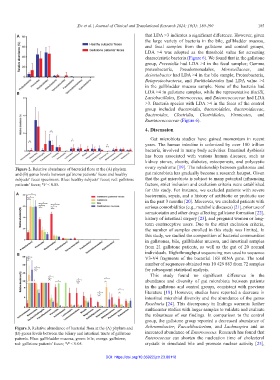
        Figure 2. Relative abundance of bacterial flora at the (A) phylum   ovary syndrome [19]. The relationship between gallstones and
        and (B) genus levels between gallstone patients’ feces and healthy   gut microbiota has gradually become a research hotspot. Given
        subjects’ feces specimens. Blue: healthy subjects’ feces; red: gallstone   that the gut microbiota is subject to many potential influencing
        patients’ feces; *P < 0.05.                            factors, strict inclusion and exclusion criteria were established
                                                               for this study. For instance, we excluded patients with severe
        A                                                      bacteremia, sepsis, and a history of antibiotic or probiotic use
                                                               in the past 3 months [20]. Moreover, we excluded patients with
                                                               serious comorbidities (e.g., metabolic diseases) [21], prior use of
                                                               somatostatin and other drugs affecting gallstone formation [22],
                                                               history of intestinal surgery [23], and pregnant women or long-
                                                               term  contraceptive  users. Due to the  strict  exclusion  criteria,
                                                               the number of samples enrolled in this study was limited. In
                                                               this study, we studied the composition of bacterial communities
                                                               in gallstones, bile, gallbladder mucosa, and intestinal samples
                                                               from 21 gallstone  patients,  as well  as the gut of 20 normal
        B                                                      individuals. High-throughput sequencing was used to sequence
                                                               V3-V4  fragments of the bacterial 16S rRNA gene. The total
                                                               number of sequences obtained was 10 429 883 from 72 samples
                                                               for subsequent statistical analysis.
                                                                 This  study  found  no  significant  difference  in  the
                                                               abundance  and diversity  of gut microbiota  between  patients
                                                               in  the  gallstone  and  control  groups, consistent  with  previous
                                                               literature  [18]. However, studies have reported a decrease  in
                                                               intestinal microbial diversity and the abundance of the genus
                                                               Roseburia [24]. This discrepancy in findings warrants further
                                                               multicenter studies with larger samples to validate and evaluate
                                                               the  robustness  of  our  findings.  In  comparison  to  the  control
                                                               group, the gallstone group reported a decreased abundance of
       Figure 3. Relative abundance of bacterial flora at the (A) phylum and   Achromobacter,  Faecalibacterium, and  Lachnospira and an
       (B) genus levels between the biliary and intestinal tracts of gallstone   increased abundance of Enterococcus. Research has found that
       patients. Blue: gallbladder mucosa; green: bile; orange: gallstone;   Enterococcus can shorten the nucleation  time of cholesterol
       red: gallstone patients’ feces; *P < 0.05.              crystals  in  simulated  bile  and  promote  nuclear  activity  [25],


                                               DOI: https://doi.org/10.36922/jctr.23.00118

