


Page 36 - JCTR-10-3
P. 36
210                       Silberg et al. | Journal of Clinical and Translational Research 2024; 10(3): 209-211
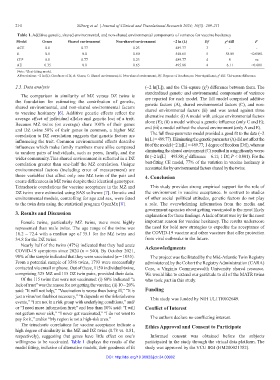
        Table 1. Additive genetic, shared environmental, and non-shared environmental components of variance for vaccine hesitancy
        Model      Genes      Shared environment  Non‑shared environment   −2 ln (L)    Df       χ  diff      P
                                                                                                 2
        ACE         0.0             0.77                  0.23              489.77       3         -          -
        E           0.0             0.0                   1.00              548.65       5       58.88      <0.0001
        CE*         0.0             0.77                  0.23              489.77       4        0          ns
        AE          0.35            0.0                   0.65              495.88       4       6.11       <0.001
        Note: *Best-fitting model.
                                                                                              2
        Abbreviations: −2 ln (L): Goodness of fit; A: Genes; C: Shared environment; E: Non-shared environment; Df: Degrees of freedom; ns: Non-significant; χ  diff: Chi-square difference.
        2.3. Data analysis                                     (−2 ln[L]), and the Chi-square (χ ) difference between them. The
                                                                                         2
                                                               standardized genetic and environmental components of variance
          The  comparison  in  similarity  of  MZ  versus  DZ  twins  is
        the  foundation  for  estimating  the  contribution  of  genetic,   are reported for each model. The full model comprised additive
                                                               genetic  factors  (A),  shared  environmental  factors  (C),  and  non-
        shared  environmental,  and  non-shared  environmental  factors
        to  vaccine  hesitancy  [6]. Additive  genetic  effects  reflect  the   shared  environmental  factors  (E)  and  was  tested  against  three
        average effect of individual alleles and genetic loci of a trait.   alternative models: (i) A model with unique environmental factors
        Because  MZ  twins  (on  average)  share  100%  of  their  genes   alone (E); (ii) a model without a genetic influence (only C and E);
        and  DZ  twins  50%  of  their  genes  in  common,  a  higher  MZ   and (iii) a model without the shared environment (only A and E).
        correlation to DZ correlation suggests that genetic factors are   The full three-parameter model provided a good fit to the data (−2
        influencing the trait. Common environmental effects describe   ln[L] = 489.77). Eliminating the genetic parameter (A) did not affect the
        influences which make family members more alike compared   fit of the model (−2 ln[L] = 489.77; 1 degree of freedom [Df]), whereas
        to random pairs of individuals, such as peers, family, and the   eliminating the shared environment (C) resulted in a significantly worse
                                                                                 2
        wider community.This shared environment is reflected in a DZ   fit (−2 ln[L] = 495.88; χ difference = 6.11; 1 Df; P < 0.001). For the
        correlation greater than one-half the MZ correlation. Unique   best-fitting CE model, 77% of the variation in vaccine hesitancy is
        environmental  factors  (including  error  of  measurement)  are   accounted for by environmental factors shared by the twins.
        those variables that affect only one MZ twin of the pair and   4. Conclusion
        create differences in MZ twins despite their identical genotypes.
        Tetrachoric correlations for vaccine acceptance in the MZ and   This study provides strong empirical support for the role of
        DZ twins were estimated using SAS software [7]. Genetic and   the environment in vaccine acceptance. In contrast to studies
        environmental models, controlling for age and sex, were fitted   of other social–political attitudes, genetic factors do not play
        to the twin data using the statistical program OpenMx [8].  a  role.  The  overwhelming  information  from  the  media  and
                                                               government agencies about getting vaccinated is the most likely
        3. Results and Discussion                              explanation for these findings. A lack of trust was by far the most
          Female  twins,  particularly  MZ  twins,  were  more  highly   important reason for vaccine hesitancy. The results underscore
        represented than male twins. The age range of the twins was   the need for bold new strategies to expedite the acceptance of
        18.2 – 72.4 with a median age of 35.1 for the MZ twins and   the COVID-19 vaccine and other vaccines that offer protection
        34.8 for the DZ twins.                                 from viral outbreaks in the future.
          Nearly half of the twins (47%) indicated that they had acute
        COVID-19 symptoms since 2020 (n = 540). By October 2021,   Acknowledgments
        90% of the sample indicated that they were vaccinated (n = 1035).   The project was facilitated by the Mid-Atlantic Twin Registry
        From a potential sample of 3586 twins, 1793 were successfully   administered by the Cohort the Registry Administration (CARA)
        contacted via email or phone. Out of these, 1150 individual twins,   Core,  a  Virginia  Commonwealth  University  shared  resource.
        comprising 325 MZ and 115 DZ twin pairs, provided their data.  We would like to extend our gratitude to all of the MATR twins
          Of the 115 twins that were not vaccinated: (i) 60% indicated “a   who took part in this study.
        lack of trust” was the reason for not getting the vaccine; (ii) 10 – 20%
        said: “It will not help,” “Vaccination is worse than being ill,” “It is   Funding
        just a virus/not fatal/not necessary,” “It depends on the risks/adverse   This study was funded by NIH UL1TR002649.
        events,” “I am not in a risk group with underlying conditions,” and/
        or “I need more information first;” and less than 10% said: “I will   Conflict of Interest
        not get/am never sick,” “I never get vaccinated,” “I do not want to
        pay for it,” and/or “My region is not a high-risk area.”  The authors declare no conflicting interest.
          The tetrachoric correlations for vaccine acceptance indicate a   Ethics Approval and Consent to Participate
        high degree of similarity in the MZ and DZ twins (0.78 vs. 0.81,
        respectively),  suggesting  that  genes  have  little  effect  on  one’s   Informed  consent  was  obtained  before  the  subjects
        willingness to be vaccinated. Table 1 displays the results of the   participated in the study through the virtual data platform. The
        model fitting, inclusive of alternative models, their goodness of fit   study was approved by the VCU IRB (HM200021382).

                                               DOI: http://doi.org/10.36922/jctr.24.00002

