


Page 41 - JCTR-10-3
P. 41
Rando et al. | Journal of Clinical and Translational Research 2024; 10(3): 212-218   215
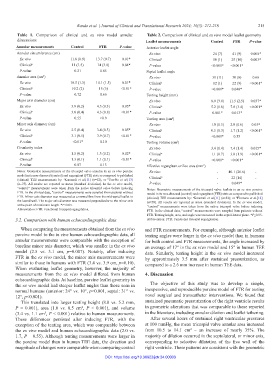
        Table  1. Comparison of clinical and  ex vivo model annular   Table 2. Comparison of clinical and ex vivo model leaflet geometry
        dimensions                                             Leaflet measurements        Control  FTR    P‑value
        Annular measurements   Control     FTR      P‑value    Anterior leaflet angle
        Annular circumference (cm)                               Ex vivo                    24 (7)  41 (9)  0.008*
         Ex vivo               11.8 (0.9)  13.7 (0.7)  0.01*     Clinical a                 10 (1)  25 (10)  0.003*
         Clinical a             11 (1.5)  14 (3.8)   0.04*       P-value                   <0.001*  <0.001*
         P-value                 0.21       0.85               Septal leaflet angle
        Annular area (cm )                                       Ex vivo                   31 (11)  30 (6)  0.66
                   2
         Ex vivo               10.5 (1.3)  14.1 (1.5)  0.01*     Clinical a                 12 (1)  22 (9)  <0.001*
         Clinical a             10.2 (2)   15 (5)   <0.01*       P-value                   <0.001*  0.040*
         P-value                 0.72       0.66               Tenting height (mm)
        Major axis diameter (cm)                                 Ex vivo                   8.0 (3.0)  11.5 (2.5)  0.037*
         Ex vivo               3.9 (0.2)  4.3 (0.3)  0.05*       Clinical a                5.2 (1.8)  7.8 (3.4)  <0.001*
         Clinical a            3.8 (0.4)  4.3 (0.8)  <0.01*      P-value                   0.001*   0.013*
         P-value                 0.55       >0.9               Tenting area (cm )
                                                                          2
        Minor axis diameter (cm)                                 Ex vivo                   1.0 (0.5)  2.0 (0.6)  0.05*
         Ex vivo               2.5 (0.4)  3.4 (0.5)  0.05*       Clinical a                0.5 (0.3)  1.7 (1.2)  <0.001*
         Clinical a            3.1 (0.5)  3.9 (0.7)  <0.01*      P-value                   <0.001*  0.55
         P-value                <0.01*      0.10               Tenting volume (cm )
                                                                            3
        Circularity index                                        Ex vivo                   3.4 (1.4)  7.4 (1.4)  0.015*
         Ex vivo               1.5 (0.2)  1.3 (0.2)  0.02*       Clinical a                1.1 (0.7)  3.0 (1.9)  <0.001*
         Clinical b            1.3 (0.1)  1.1 (0.1)  <0.01*      P-value                   <0.001*  <0.001*
         P-value                 0.07       0.13               Effective regurgitant orifice area (mm )
                                                                                       2
        Notes: Geometric measurements of the tricuspid valve annulus in an ex vivo porcine   Ex vivo  -  40.1 (26.6)  -
        model in its non-diseased (control) and regurgitant (FTR) state as compared to published   Clinical b  -  22 (14)  -
        (clinical)  TEE  measurements  by:  Karamali  et  al.[11] (n=52); or  Ton-Nu  et  al.[13]
                            a
                                               b
        (n=75). All results are reported as mean (standard deviation). In the  ex vivo model,   P-value  -  0.049*
        “control”  measurements  were taken from the native  tricuspid valve before inducing   Notes: Geometric measurements of the tricuspid valve leaflets in an ex vivo porcine
        FTR. In the clinical data, “control” measurements were sampled from patients without   model in its non-diseased (control) and regurgitant (FTR) state as compared to published
        FTR. Minor axis diameter was measured as a normal line from the mid-septal leaflet to   (clinical) TEE measurements by:  Karamali et al.[11] (n=52); or  Florescu et al.[12]
                                                                                   a
                                                                                                      b
        the lateral wall. The major axis diameter was measured perpendicular to the minor axis   (n=58). All results are reported as mean (standard deviation).  In the  ex vivo model,
        at the point of maximum length. *P≤0.05.                “control”  measurements were taken from the native tricuspid valve before inducing
        Abbreviation: FTR: Functional tricuspid regurgitation.  FTR. In the clinical data, “control” measurements were sampled from patients without
                                                                FTR. Tenting height, area, and angle were measured in the septal-lateral plane. *P≤0.05.
        3.2. Comparison with human echocardiographic data       Abbreviation: FTR: Functional tricuspid regurgitation.
          When comparing the measurements obtained from the ex vivo   and FTR measurements. For example, although anterior leaflet
        porcine model to the in vivo human echocardiographic data, all   tenting angles were larger in the ex vivo model than in humans
        annular measurements were comparable with the exception of   for both control and FTR measurements, the angle increased by
        baseline minor axis diameter, which was smaller in the ex vivo   an average of 17° in the ex vivo model and 15° in human TEE
        model (2.5  vs. 3.1  cm,  p=0.007). Notably, after inducing   data. Similarly, tenting height in the ex vivo model increased
        FTR in the ex vivo model, the minor axis measurements were   by approximately 3.5  mm after sustained pressurization, as
        similar to those in humans with FTR (3.4 vs. 3.9 cm, p=0.10).   compared to a 2.6 mm increase in human TEE data.
        When  evaluating  leaflet  geometry,  however,  the  majority  of
        measurements  from the  ex vivo  model  differed  from  human   4. Discussion
        echocardiographic data. At baseline, porcine leaflet geometry in
        the ex vivo model had steeper leaflet angles than those seen in   The objective  of this study was to develop  a simple,
        normal humans (anterior: 24° vs. 10°, p<0.001, septal: 31° vs.   inexpensive, and reproducible porcine model of FTR for testing
        12°, p<0.001).                                         novel surgical and transcatheter interventions. We found that
          This  translated  into  larger  tenting  height  (8.0  vs. 5.2  mm,   sustained pneumatic pressurization of the right ventricle results
        P  =  0.001), area (1.0  vs. 0.5 cm ,  P  < 0.001), and volume   in geometric alterations that was comparable to those reported
                                    2
        (3.4 vs. 1.1 cm , P < 0.001) relative to human measurements.   in the literature, including annular dilation and leaflet tethering.
                    3
        These  differences  persisted  after  inducing  FTR,  with  the   After several hours of sustained right ventricular pressures
        exception of the tenting area, which was comparable between   at 100 mmHg, the mean tricuspid valve annular area increased
                                                                                  2
        the ex vivo model and human echocardiographic data (2.0 vs.   from 10.5 to 14.1 cm  – an increase of nearly 35%.  The
        1.7, P = 0.55). Although tenting measurements were larger in   majority of dilation occurred in the septolateral, or minor axis,
        the porcine model than in human TEE data, the direction and   corresponding to selective  dilatation  of the free wall of the
        magnitude of changes were comparable when comparing control   right ventricle. These patterns are consistent with the geometric

                                              DOI: https://doi.org/10.36922/jctr.24.00003

