


Page 12 - JCTR-10-5
P. 12
274                       Schirato et al. | Journal of Clinical and Translational Research 2024; 10(5): 269-282


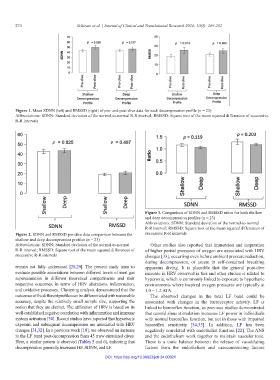
        Figure 1. Mean SDNN (left) and RMSSD (right) of pre- and post-dive data for each decompression profile (n = 23)
        Abbreviations: SDNN: Standard deviation of the normal-to-normal R-R interval; RMSSD: Square root of the mean squared differences of successive
        R-R intervals


                                                               Figure 3. Comparison of SDNN and RMSSD ratios for both shallow
                                                               and deep decompression profiles (n = 23)
                                                               Abbreviations: SDNN: Standard deviation of the normal-to-normal
                                                               R-R interval; RMSSD: Square root of the mean squared differences of
        Figure 2. SDNN and RMSSD pre-dive data comparison between the   successive R-R intervals
        shallow and deep decompression profiles (n = 23)
        Abbreviations: SDNN: Standard deviation of the normal-to-normal   Other studies also reported that immersion and inspiration
        R-R interval; RMSSD: Square root of the mean squared differences of   of higher partial pressures of oxygen are associated with HRV
        successive R-R intervals                               changes [33], occurring even before ambient pressure reduction,
                                                               during  decompression,  or  ascent  in  self-contained  breathing
        remain  not  fully  understood  [28,29].  The present study aims to   apparatus  diving.  It  is  plausible  that  the  general  post-dive
        evaluate possible associations between different levels of inert gas   increase in HRV observed in this and other studies is related to
        supersaturation  in  different  theoretical  compartments  and  their   hyperoxia, which is commonly linked to exposure to hyperbaric
        respective  outcomes,  in  terms  of  HRV  alterations,  inflammation,   environments where inspired oxygen pressures are typically at
        and oxidative processes. Clustering analysis demonstrated that the   1.0 – 1.2 ATA.
        outcomes of the different profiles can be differentiated with reasonable   The  observed  changes  in  the  total  LF  band  could  be
        accuracy,  despite  the  relatively  small  sample  size,  supporting  the   associated  with  changes  in  the  baroreceptor  activity.  LF  is
        notion that they are distinct. The utilization of HRV is based on its   linked to baroreflex function, as previous studies demonstrated
        well-established negative correlation with inflammation and immune   that carotid sinus stimulation increases LF power in individuals
        system activation [30]. Recent studies have reported that hyperbaric   with normal baroreflex function, but not in those with impaired
        exposure and subsequent decompression are associated with HRV   baroreflex  sensitivity  [34,35].  In  addition,  LF  has  been
        changes [31,32]. In a previous work [18], we observed an increase   negatively correlated with endothelial function [22]. The ANS
        in the LF band post-decompression from 45 msw-simulated dives.   and the endothelium work together to maintain vascular tone.
        Here, a similar pattern is observed (Tables 5 and 6), indicating that   There  is  a  tonic  balance  between  the  release  of  vasodilating
        decompression generally increases HF, SDNN, and LF.    factors  from  the  endothelium  and  vasoconstricting  factors

                                              DOI: https://doi.org/10.36922/jctr.24.00021

