


Page 15 - JCTR-10-5
P. 15
Schirato et al. | Journal of Clinical and Translational Research 2024; 10(5): 269-282   277
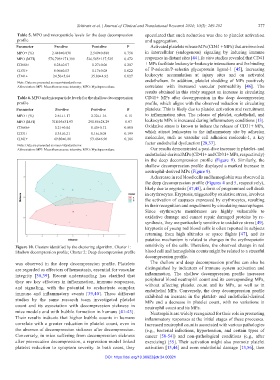
        Table 5. MPO and microparticle levels for the deep decompression   speculated that such reduction was due to platelet activation
        profile                                                and aggregation.
        Parameter       Pre‑dive        Post‑dive      P         Activated platelets release MPs (CD41 + MPs) that are involved
        MPO+ (%)       2.448±0.830     2.549±0.888    0.758    in  intercellular  (endogenous)  signaling  by  inducing  immune
        MPO (MFI)     576.796±171.399  526.565±137.525  0.472  responses in distant sites [44]. In vitro studies revealed that CD41
        CD66b+          0.28±0.07       0.27±0.06     0.207    + MPs facilitate leukocyte–leukocyte interactions and the binding
        CD31+           0.06±0.03       0.17±0.08     0.022    of  P-selectin/P-selectin  glycoprotein  ligand-1  [45],  increasing
        CD41+           24.50±5.64      35.80±4.92    0.027    leukocyte  accumulation  at  injury  sites  and  on  activated
        Note: Data are presented as mean±standard error.       endothelium.  In  addition,  platelet  shedding  of  MPs  positively
        Abbreviation: MFI: Mean fluorescence intensity; MPO: Myeloperoxidase.  correlates  with  increased  vascular  permeability  [46]. The
                                                               results obtained in this study suggest an increase in circulating
        Table 6. MPO and microparticle levels for the shallow decompression   CD41+  MPs  after  decompression  in  the  deep  decompression
        profile                                                profile, which aligns with the observed reduction in circulating
        Parameter        Pre‑dive       Post‑dive      P       platelets. This is likely due to platelet activation and recruitment
        MPO+ (%)        2.61±1.17       2.32±1.16     0.15     to  inflammation  sites. The  release  of  platelet,  endothelial,  and
        MPO (MFI)      314.95±31.93    291.05±28.29   0.07     leukocyte MPs is increased during inflammatory conditions [13].
        CD66b+          0.21±0.04       0.40±0.12     0.000    Oxidative stress is known to induce the release of CD31+ MPs,
        CD31+           0.35±0.21       0.16±0.08     0.199    which  attract  leukocytes  to  the  inflammatory  site  by  adhesion
        CD41+           49.80±6.80     53.46±6.96     0.186    molecules,  such  as  vascular  cell  adhesion  molecule-1,  a  key
        Note: Data are presented as mean±standard error.       factor endothelial dysfunction [28,37].
        Abbreviation: MFI: Mean fluorescence intensity; MPO: Myeloperoxidase.  Our results demonstrated a post-dive increase in platelet- and
                                                               endothelial-derived MPs (CD41+ and CD31+ MPs, respectively)
                                                               in  the  deep  decompression  profile  (Figure  9).  Similarly,  the
                                                               shallow decompression profile displayed a marked increase in
                                                               neutrophil-derived MPs (Figure 9).
                                                                 A decrease in red blood cells and hemoglobin was observed in
                                                               the deep decompression profile (Figures 4 and 5, respectively),
                                                               likely due to eryptosis [47,48], a form of programmed cell death
                                                               in erythrocytes. Eryptosis, triggered by oxidative stress, involves
                                                               the activation of caspases expressed by erythrocytes, resulting
                                                               in their recognition and engulfment by circulating macrophages.
                                                               Since  erythrocyte  membranes  are  highly  vulnerable  to
                                                               oxidative damage and cannot repair damaged proteins by re-
                                                               synthesis, they are particularly sensitive to oxidative stress [49].
                                                               Eryptosis of young red blood cells is often reported in subjects
                                                               returning  from  high  altitudes  or  space  flights  [47],  and  its
                                                               putative mechanism is related to changes in the erythropoietin
        Figure 10. Clusters identified by the clustering algorithm. Cluster 1:   sensitivity of the cells. Therefore, the observed change in red
        Shallow decompression profile; Cluster 2: Deep decompression profile  blood cell and hemoglobin counts might be related to a stressful
                                                               decompression profile.
        was  observed  in  the  deep  decompression  profile.  Platelets   The  shallow  and  deep  decompression  profiles  can  also  be
        are regarded as effectors of hemostasis, essential for vascular   distinguished  by indicators  of immune  system activation  and
        integrity  [38,39].  Recent  understanding  has  clarified  that   inflammation.  The  shallow  decompression  profile  increases
        they are key effectors in inflammation, immune responses,   peripheral blood neutrophil count and its corresponding MPs,
        and  signaling,  with  the  potential  to  orchestrate  complex   without  affecting  platelet  count  and  its  MPs,  as  well  as  in
                                                               endothelial MPs. Conversely, the deep decompression profile
        immune  and  inflammatory  events  [39,40]. Three  different   exhibited  an  increase  in  the  platelet-  and  endothelial-derived
        studies  by  the  same  research  team  investigated  platelet   MPs  and  a  decrease  in  platelet  count,  with  no  variations  in
        count and its association with decompression sickness in   neutrophil count and its MPs.
        mice models and with bubble formation in humans [41-43].   Neutrophils are widely recognized for their role in promoting
        Their results indicate that higher bubble counts in humans   inflammatory responses at the initial stages of these processes.
        correlate with a greater reduction in platelet count, even in   Increased neutrophil count is associated with various pathologies
        the absence of decompression sickness after decompression.   (e.g.,  bacterial  infections,  hypertension,  and  certain  types  of
        Conversely, in mice suffering from decompression sickness   cancer  [50-54])  and  non-pathological  conditions  (e.g.,  after
        after provocative decompression, a regression model linked   exercising) [55]. Their activation might also promote platelet
        platelet reduction to symptom severity. In both cases, they   activation [13,44] and even endothelial damage [13,56], then

                                              DOI: https://doi.org/10.36922/jctr.24.00021

