


Page 47 - JCTR-10-5
P. 47
Arnold and Arm | Journal of Clinical and Translational Research 2024;10(5):307-316   309
        use and can be topically applied in a dry form to the surface of   models of pressure injury and ischemia  [12,13]. In a robust
        the wound (Figure 1). PMVT is isolated through a proprietary   Level 1, prospective, randomized, controlled, and multicenter
        process that involves cutting, cleaning, isolation, lyophilization,   clinical trial involving 100 diabetic patients with non-healing
        and sterilization  of the  harvested  tissue,  and is intended  to   Wagner Grades 1 and 2 neuropathic foot ulcers (the “HIFLO
        improve  blood  flow  through  the  repair  and  reconstruction   Trial”), the weekly topical application of PMVT resulted in
        of microvascular tissue,  by serving as a scaffold for cellular   significantly  increased  complete  wound  closure  at  12  weeks
        invasion  and  capillary  growth.  The  benefits  of  improved   compared to the standard-of-care group (74% vs. 38%;  P =
        microcirculatory blood flow may be particularly impactful on   0.00029, with a nine-fold increased odds of healing). Sub-
        patients with compromised microvasculature.            studies also demonstrated improved wound area perfusion
          Preclinical studies of PMVT demonstrated angiogenesis   and increased levels of sensation and tissue quality in this
        support  and  significantly  increased  healing  rates  in  rodent   neuropathic patient population  [14,15]. Here, we report on
                                                               real-world clinical experiences with PMVT in a case series of
        A                                                      five challenging non-healing wounds.
                                                               2. Methods
                                                                 All patients received weekly or semi-weekly topical PMVT
                                                               treatment  until  wound sites closed  or demonstrated  active
                                                               healing with evidence of good microcirculation and progressing
                                                               re-epithelialization.  In all cases within this series, PMVT
                                                               was covered with a non-adherent dressing and left untouched
                                                               between visits. Patients were directed not to change the wound
                                                               dressing, to comply with standard care guidance appropriate for
                                                               each of their wounds, and to return weekly for assessment of
                                                               the wound and (if needed) reapplication of the PMVT product.
                                                               Wound size was measured using a ruler at each visit, and, when
                                                               appropriate,  wound depth  was determined  using a  DM Stick
                                                               foam-tipped measuring device (Puritan, USA). Closure criteria
                                                               were 100% epithelialization  with no maceration,  exudate, or
                                                               signs of infection.
                                                                 As this case series was conducted under the standard
                                                               practice of medicine with a commercial human tissue
                                                               product for each respective application, no additional ethical
                                                               regulations or formal research protocol were required, nor were
                                                               the cases added to a public database. All facility procedures
                                                               for obtaining patient consent for treatment were followed,
                                                               and release forms to allow data and image publication were
                                                               obtained from each patient.
                                                               3. Results
         B
                                                               3.1. Case 1: Stimulation of perfusion and healing using PMVT
                                                               in a refractory metatarsal diabetic foot ulcer
                                                                 Despite growing efforts to adopt a “limb  preservation”
                                                               approach  in wound clinics,  amputations  are  an increasingly
                                                               unwanted complication of non-healing foot ulcers in diabetic
                                                               patients and are known to have a 50% mortality  rate within
                                                               5 years [16]. When amputation is necessary, a transmetatarsal
                                                               amputation (TMA) (as opposed to a below-the-knee amputation)
                                                               may be justified when macrovascular blood flow to the foot is
                                                               sufficient. However, patients with TMA are at high risk of skin
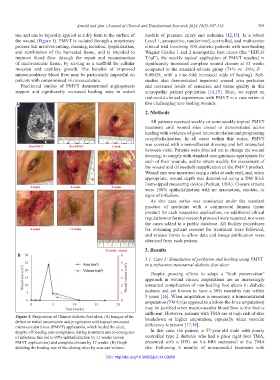
        Figure 3. Progression of Charcot diabetic foot ulcer. (A) Images of the
        defect on initial presentation and progression with topical processed   breakdown  or  higher  amputation,  especially  when  vascular
        microvascular tissue (PMVT) application, which healed the ulcer,   deficiency is present [17,18].
        despite off-loading non-compliance during treatment and re-emergence   In this case, the patient,  a 57-year-old male with poorly
        of infection; this led to 99% epithelialization by 11 weeks (seven   controlled  type  2 diabetes who had a prior right foot  TMA,
        PMVT applications) and complete closure by 17 weeks. (B) Graph   presented  with  a  DFU  on  his  fifth  metatarsal  at  the  TMA
        detailing the healing rate of the closing ulcer by area and volume.  site.  Following  6  months  of unsuccessful  treatment  with
                                               DOI: http://doi.org/10.36922/jctr.24.00059

